
The real cost to install an automatic water shut-off valve comes down to three things: the device itself, where your main line is, and who does the work. In North Texas, most installations we do – Moen Flo, YoLink FlowSmart and similar systems – land in a predictable range, and this guide breaks down exactly what drives the price up or down, from a plumber who installs them.
Lately we’ve been getting a ton of calls about automatic water shut-off valves, smart valves like the Moen Flo, YoLink FlowSmart, and similar systems. And honestly, they’re great. But there’s a lot more to installing one than people think, especially here in North Texas. So let me break down how they work, what they cost, and the one thing we won’t do with them and why.
What an Automatic Water Shut-Off Valve Actually Does
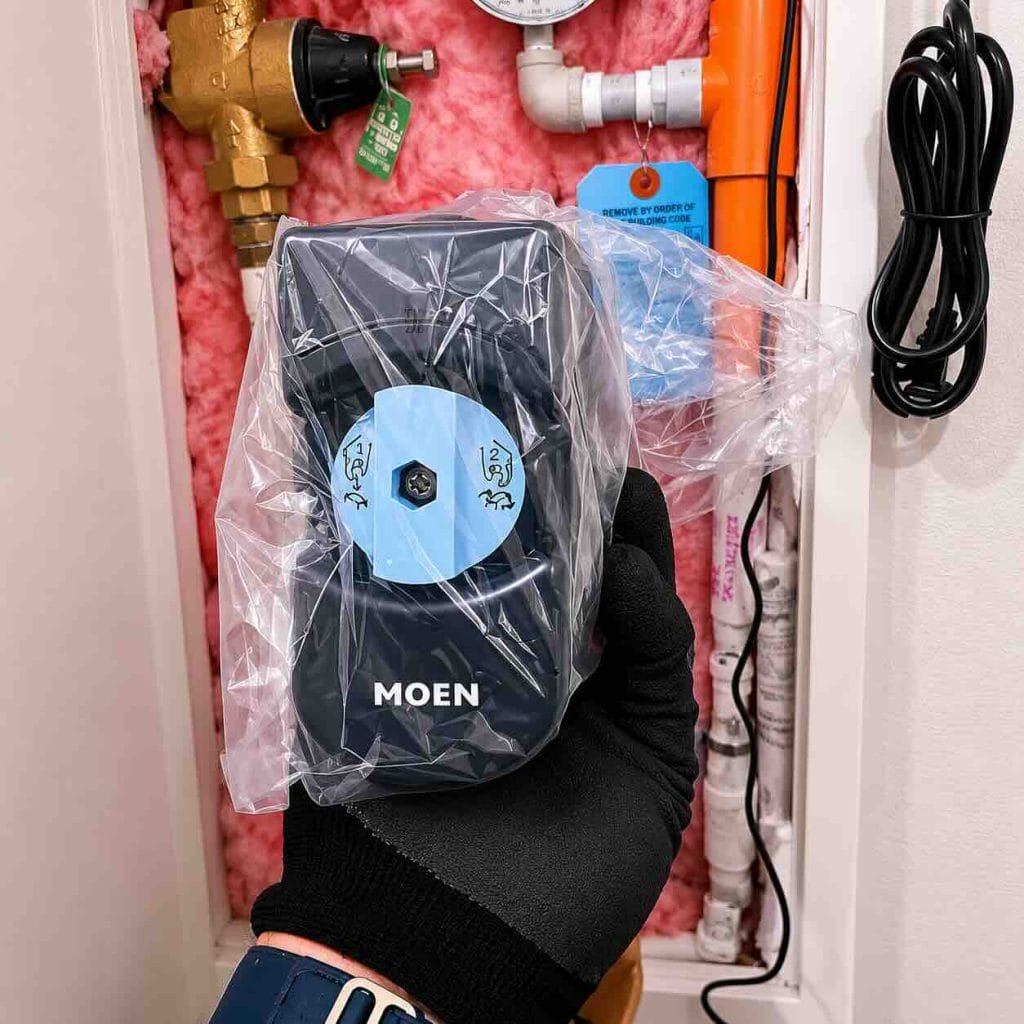
These are smart valves that monitor the water flow coming into your house. If the system sees something unusual, water running when it shouldn’t be, a flow pattern that doesn’t make sense, it can shut the water off automatically. On its own. No one has to be home.
Most of them come with sensors too, and the whole thing connects to an app on your phone. So at any moment you can pull out your phone and see exactly how much water is being used right now, what’s going on, and shut the water off remotely if you want.
They can also catch hidden leaks. If all the water in the house is supposedly off but the valve still sees flow, that’s a leak, and it’ll tell you. That’s the kind of slow hidden leak that does thousands in damage before you ever notice it and instead of searching “plumber near me” at midnight with water in your walls, the valve catches it early.
Why Insurance Companies Love Them
Here’s something a lot of people don’t know, insurance companies really like these valves. Some will lower your premium if you have one installed. A few are even starting to require them on certain homes.
So beyond the peace of mind, there’s a real long-term savings angle. Lower premium every year, plus you’re protected if a pipe bursts or a line lets go. Instead of calling an emergency plumber at 2 AM while water floods your house, the valve shuts the water off on its own and saves the day. Over time, that adds up.
There Are a Lot of Brands, They All Do About the Same Thing
Moen Flo, YoLink FlowSmart, and plenty of others. They all do basically the same job, all come with a solid warranty, and the differences come down to features and ecosystem. That part’s up to you to pick what fits.
Good example, we recently had a customer who specifically chose the YoLink FlowSmart. Why? Because he already had YoLink water sensors installed under every sink in his house, and he wanted everything on one system, one ecosystem he could manage together. Made total sense for him. So picking the brand really depends on what you’ve already got and what you want.
Now Here’s the Part Nobody Tells You, The Install
This is where it gets real. These valves are made for **indoor installation.** Every manufacturer rates them with some minimal dust and moisture protection, but they are NOT built to sit in freezing cold, NOT built to be underground, and NOT built to be submerged in water. They’re moisture-resistant, sure, but they’re meant to live in a controlled environment, inside your house. That detail changes everything about the job.
The Easy Case: Newer Homes (2010–2015 and Up)
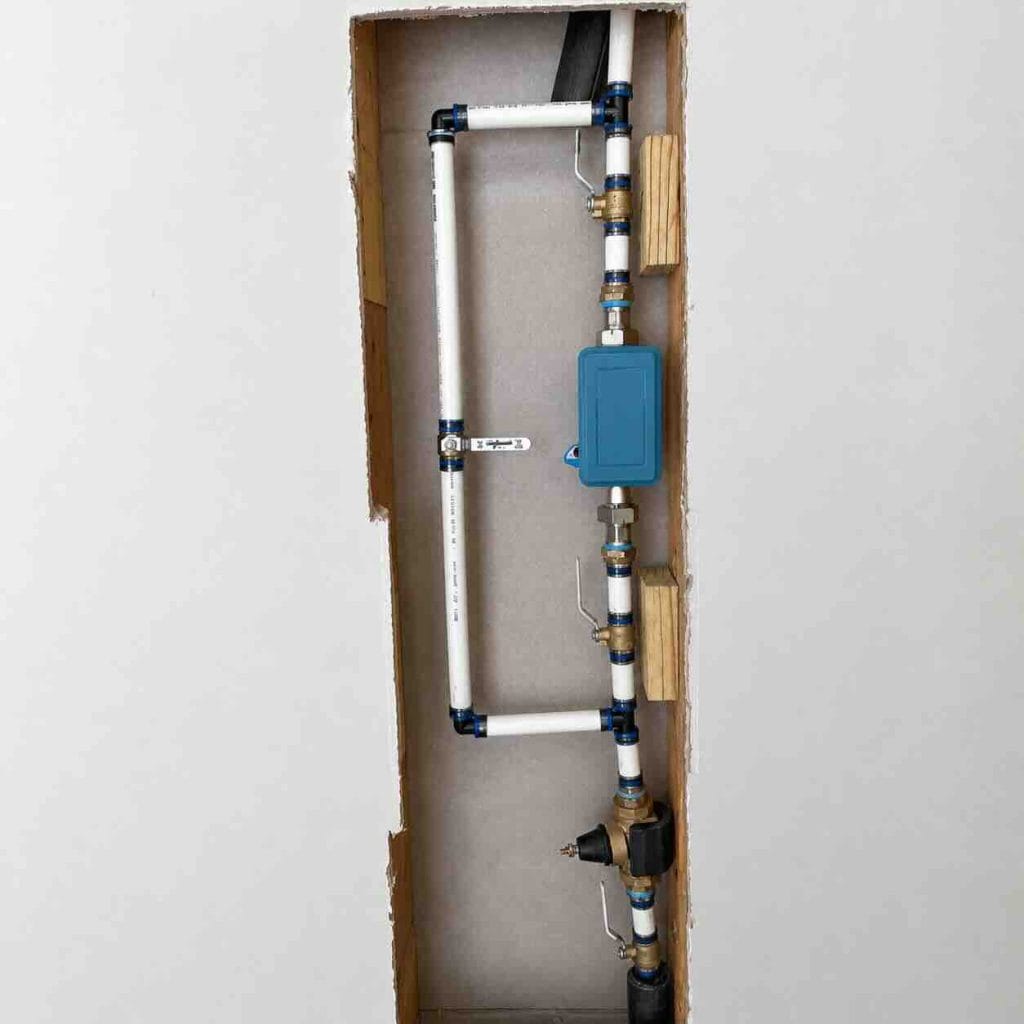
If your home was built around 2010-2015 or newer, you’ve probably got your secondary shutoff valve and pressure reducing valve (PRV) right inside the garage. In that case, great. We can install the smart valve in the garage. We’ll have to open a little drywall, but the valve ends up in a nice protected spot, exactly where it should be.
That’s roughly a **$1,000-$2,000 project** all in, and it’s honestly fantastic. You control everything, you’ve got that insurance benefit, you’re protected. Clean, simple, makes sense.
The Complicated Case: Older Homes (Before 2010)
Here’s where it gets tricky. In homes built before about 2010, that secondary shutoff valve and PRV are very often **outside, in the flower bed.** And this is where it becomes a complicated case.
A lot of homeowners ask us to just install the valve outside, in the ground. And we won’t do it. Here’s why.
First, the manufacturer says it’s for indoor installation. Right there in their own recommendations.
Second, and this is the big one **we’ve seen what happens.** Take last winter’s freeze. We got around five calls for outdoor water leaks, came out, and found these smart valves cracked and busted from the cold. Some folks had buried them in a cover box in the ground, some had brought them up above ground and wrapped them in insulation, but the bottom line is the cold got them. Five busted valves in one year from freeze. That’s why we don’t install them outside. Ever.
We’re not saying anyone else is doing it wrong. We even reached out to the manufacturer, Moen, for example and they sent us examples of their plumbers installing these outdoors in Texas with everything working fine. They even sent us photos of how they were wrapped and protected. And maybe that’s possible. But we’ve seen the cracked valves with our own eyes. So we pass on that option every time. We don’t want a callback in two months with a flooded yard and an angry customer. There’s a real contradiction here, the manufacturer’s own docs say indoor only, but their reps say their plumbers do it outside. So it’s a confusing gray area, and we choose the safe side.
Can We Still Do It on an Older Home? Yes, But It’s a Big Job
Now, we CAN still install a smart valve on an older home, we just bring it inside instead of leaving it out in the cold. But understand, this is a big, labor-intensive job.
The valve has to be installed **after the pressure reducing valve** that’s a requirement. And on most older homes, the PRV and main shutoff out in the flower bed are already past their life, corroded, sometimes seized solid. You can’t just pull them and put them back.
So here’s how the job actually goes. We find your main water line, we remove the old PRV and shutoff, then we run a loop, basically we trench underground around the house and bring the line over to the garage. We come through the garage wall, the small section of pipe coming up out of the ground gets insulated, and the smart valve gets mounted inside the garage where it’s protected. It needs constant power, it runs off a 120-volt outlet and it needs WiFi access so it can send its signal. That’s another reason it has to be inside.
It’s a long, heavy job and it can run anywhere from **$2,000 to $5,000** depending on the home. This is not an easy-peasy three-minute install like a lot of people think when they call for a quote. But in the right situation, it’s absolutely worth it, lower insurance premium, total peace of mind, and a valve that can catch a hidden leak before it costs you a fortune. It’s a smart long-term investment.
Two Real Recent Installs
Install #1, Moen, easy case.** Customer already had a Moen valve. He had a mechanical room, fire sprinkler system in a big box on the right, main shutoff and PRV on the left. Everything was right there, power was right there. We cut into the line, pulled the old PRV and shutoff, and dropped the Moen valve right in. No problems at all. Clean job.
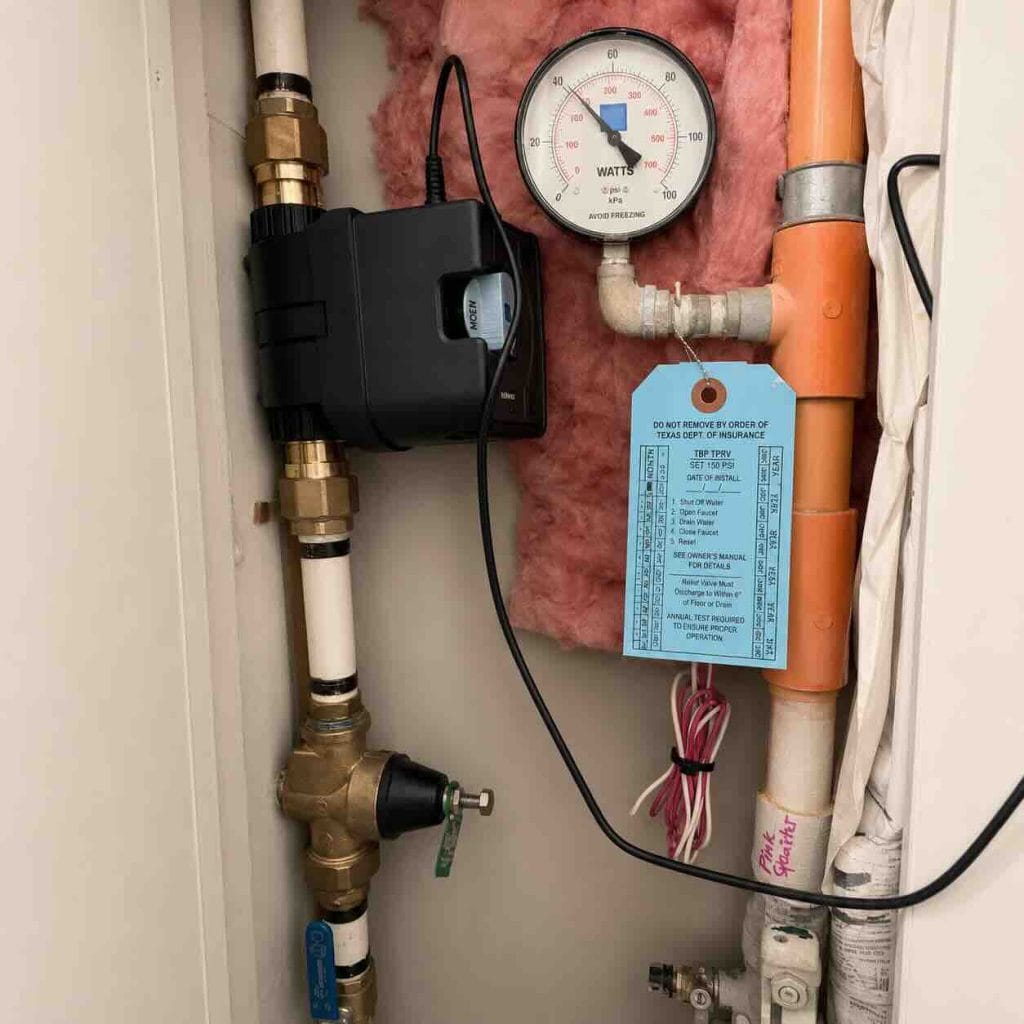
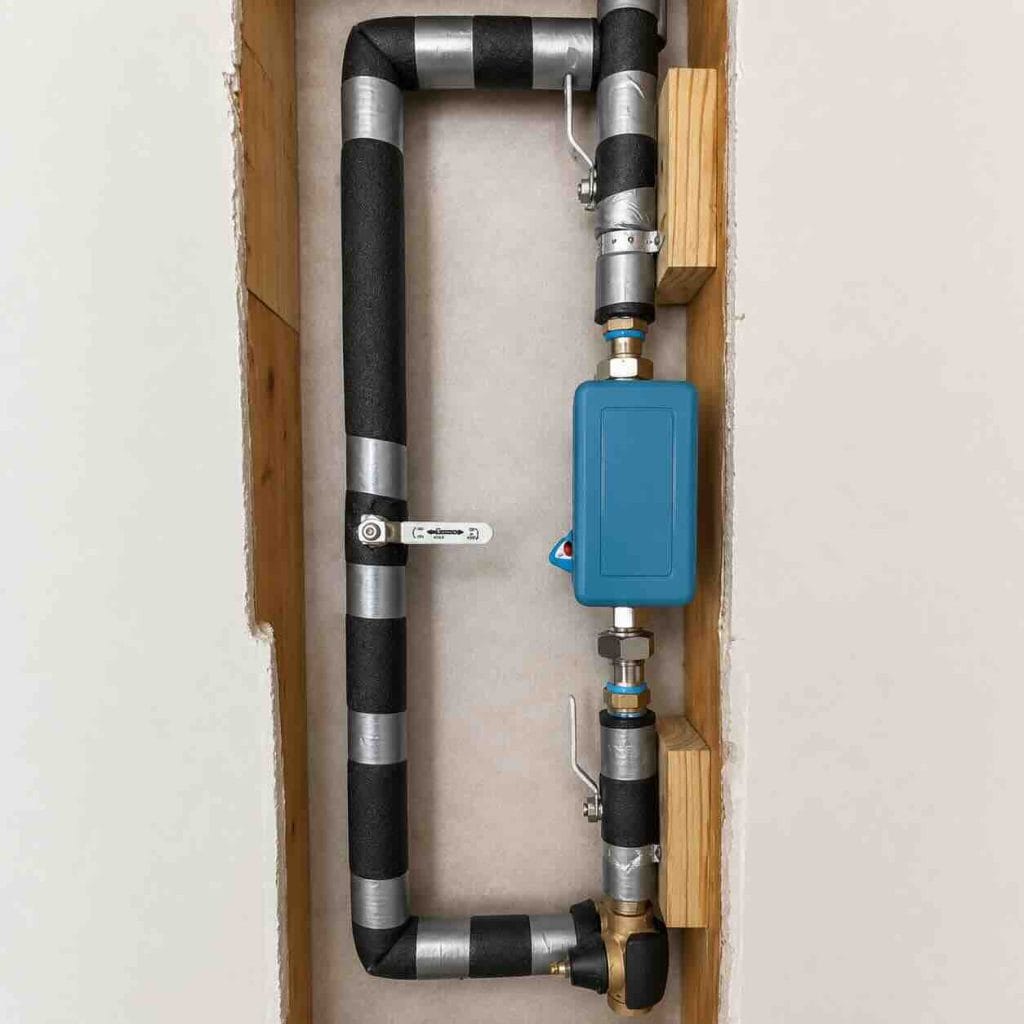
Install #2, YoLink FlowSmart, garage case.** Newer home, about 7 years old, in the garage. We had to open the drywall, photos below. The homeowner had already started noticing his water pressure jumping around, so he asked us to replace the PRV at the same time. So we swapped the main shutoff, replaced the PRV, and installed the YoLink smart water system. We also made sure it stays accessible, if the system ever needs service, or has to be shut off or replaced down the road, you’ve got to be able to get to it. Another happy customer.
Why We Wrote This
Look, we’re not writing this to judge anybody. We just want to be straight with you. Everybody thinks installing one of these is a three-minute job. People call for a quote and go “you don’t know how to do this? It’s easy, just put it outside for me.” And we’re not knocking those folks. We just want to give you the clear picture, based on what we’ve actually seen on the job.
This is our honest opinion from real experience, why we won’t install these outside, how the work actually happens, and what you’re really looking at. If you want one installed the right way, that’s exactly what we do.
FAQ
How much does it cost to install an automatic water shut-off valve?
For a newer home where the valve goes in the garage, roughly $1,000-$2,000. For an older home that needs the line rerouted to the garage, it can run $2,000-$5,000 depending on the setup.
Can an automatic water shut-off valve be installed outside?
The manufacturers rate these valves for indoor installation. We don’t install them outdoors, we’ve seen too many crack and fail in Texas winter freezes. On older homes with the shutoff outside, we reroute the line into the garage instead.
Do smart water shut-off valves lower your insurance?
Often, yes. Many insurance companies offer a lower premium for homes with an automatic water shut-off valve installed, and some are starting to require them. Check with your provider.
Which automatic shut-off valve is best, Moen or YoLink?
They all do basically the same job with solid warranties. The best one for you usually comes down to which smart-home ecosystem you already use. If you already have YoLink sensors, the YoLink FlowSmart keeps everything on one system, for example.
Thinking About a Smart Shut-Off Valve? Let’s Talk.
If you’ve been thinking about a smart water shut-off valve, give us a call. We’ll take a look at your setup, tell you straight what it’ll take, and do it right, no three-minute outdoor shortcuts. Whether you’re looking for a plumber in Frisco or a plumber in Plano, we install these smart water systems all over North Texas.
