

What Plumbing Services We Offer in Plano TX
Our plumbing services in Plano cover the whole house, and each one below has a page of its own. Most of what a plumber in Plano gets called for is residential: repairs in houses, and the replacements that come with their age.
Emergency plumbing comes first: it's our main service. Somebody is on the line around the clock, holidays too, and when it's a real emergency in Plano, we come out.
Leaks next. Water leak detection finds the leak before anything gets opened. Slab leak repair is for the copper under the foundation, and water line repair is for the copper that runs from the meter to the house. PRV replacement is the page about water pressure. For hot water there's water heater repair and replacement, and next to it expansion tank replacement.
Then the drains. Drain cleaning is the clog itself: a kitchen line, a tub, a bathroom sink with the AC condensate line tied into its drain. Sewer line repair and camera inspection is for a main line that keeps backing up or has broken. Around the house it's toilet repair, faucet and shower valve repair, garbage disposal repair, and hose bib repair for the outside spigots.
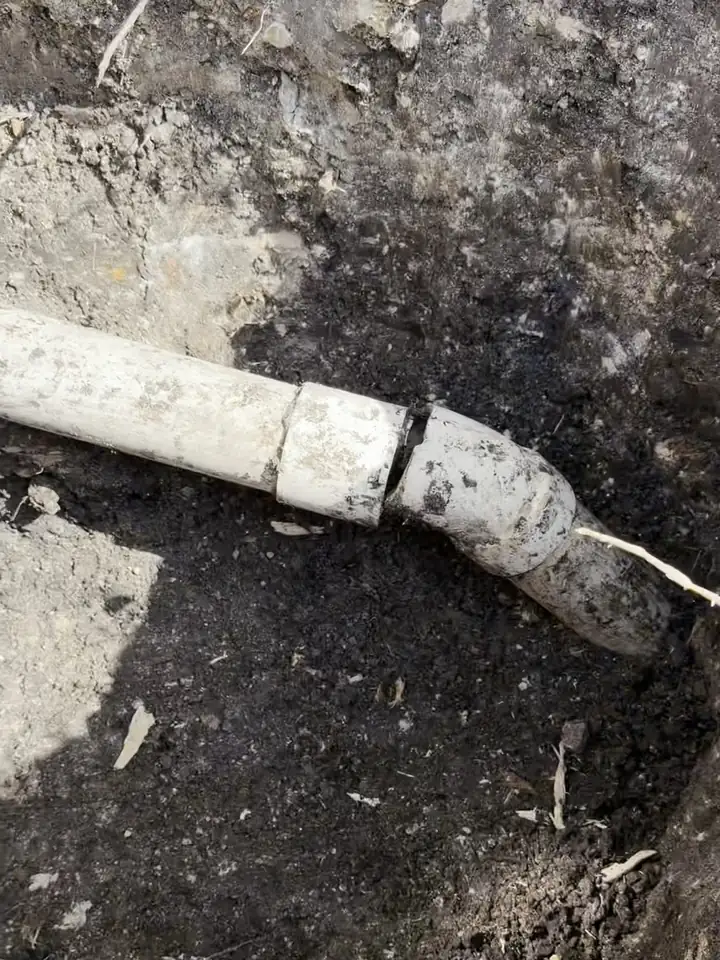
Plano Plumbing by the Age of the House
What breaks in a Plano house depends on the year it was built, and that changes from one part of town to the next. Two plumbers in Plano can spend the same day on completely different work. The oldest streets, from the 1960s, are east of Highway 75. The middle of the city, between Highway 75 and Coit Road and south of Legacy Drive, was built mostly in the 1970s and 1980s, and a lot of the houses there, off Parker Road and along Independence Parkway, are around forty years old. That's where we find cast iron under the floor, slab leaks, and copper that has been in the ground since the house was built.
West of Coit Road and up around Legacy Drive the houses are from the 1990s and 2000s. Our office is in that part of town, and the calls there are different: water heaters at the end of their life, garbage disposals, faucets, sink drains, a leak coming through a ceiling, and after a hard freeze, pipes in the attic. Newer doesn't mean nothing breaks. By the U.S. Census Bureau's estimate the median year built for a home in Plano is 1993, so about half the homes in the city are older than that, and that older half is where the heavy Plano plumbing work is.
Common Plumbing Problems in Plano Homes
Common plumbing problems in Plano homes include cast iron main drain lines that back up, kitchen lines and sink drains that clog, water heaters left on an old vent pipe, outside spigots soldered to the pipe, pipes that burst in outside walls after a hard freeze, and three handle shower valves that won't shut off. Most of them come out of the older houses in the middle of the city.
Cast iron main drain lines, and no cleanout to work from
In the older houses the drain lines under the floor are cast iron. After forty years that pipe rusts and cracks, and it loses its shape. What's left of the inside fills up with grease, dirt, calcium and rust. In about half of these houses there's no cleanout where one should be, so when the main line backs up, the way in is often through a toilet. Pulling that toilet is a job in itself. It's stuck down with silicone and set in cement, and when it comes up, there's often no flange left under it: the flange has rusted away, and then it has to be repaired too. In a newer house, clearing a main line takes up to half an hour. In old Plano it can take two to three hours to unclog the same kind of line. A line that is cracked or keeps backing up is a job for sewer line repair and camera inspection. And a toilet that clogs again a week after it was cleared can be a pipe that came apart under the floor. We wrote up one Plano job like that: why a toilet keeps backing up after it was cleared.


Kitchen lines and sink drains
Not every clog is the main line. A slow drain in the kitchen is usually grease, and the kitchen line in one of these houses has been taking it for decades. A cable opens a line like that. The deep clean is the chain snake: ours has 75 feet of cable, and it's close to a commercial grade machine. Bathroom sinks fill up with hair and soap. Where the air conditioner drains into the same pipe, the first sign is water inside the cabinet. And then there are wet wipes. We've pulled them out of a shower drain, and at a daycare here they blocked the whole main line. That story is here: a daycare whose main drain line was packed with wipes. Unclogging any of these is on the drain cleaning page.

Water heaters on a new tank and an old vent
In a house that is thirty or forty years old the water heater has been replaced more than once, and the vent pipe above it is still the old one. On a gas heater that's a double wall B-vent, and with age its inner wall comes apart and drops out. Then the whole vent has to be replaced, up through the ceiling and out through the roof. We also find vents that were never strapped, and vents that touch the drywall or the roof deck where the code calls for clearance. That's a carbon monoxide risk and a fire risk. It's also why a replacement that should take four or five hours can take the whole day in an older Plano house. The tank itself is on the water heater repair and replacement page.
Outside spigots soldered to the pipe
The older houses don't have frost free spigots. What they have is a plain spigot soldered onto a copper pipe, and in some yards it isn't even on the wall: the pipe comes up out of the ground about two feet from the house with the spigot on top of it. When one of those fails, we unsolder it and put the new spigot on a threaded connection. Hose bib repair is the page for outside spigots. A frost free one can crack too, inside the wall, when a hose stays on it through a freeze. Another Plano job shows what cracks inside a frost free spigot.
Pipes in outside walls, after a hard freeze
Insulation in a wall that is thirty to fifty years old has worn out and settled, and a water line in an outside wall is no longer protected the way it was when the house was new. In a hard freeze those lines burst. We've had pipe breaks behind kitchen cabinets on an outside wall, frozen toilet supply lines that split right at the shut-off valve, and one tub and shower valve in an outside corner where all the tile had to come off to reach it. After the pipe repair, our restoration partner dries the wall and puts the insulation back, and they deal with the insurance company. Before a freeze, leave the faucets inside the house dripping and open the cabinet doors under the sinks. The city's winter advice says the same.
Three handle shower valves that won’t shut off
Bathroom plumbing in these houses still means three handle tub and shower valves: hot, cold, and the diverter between them. After decades the valve stops closing all the way. It drips into the tub, or it leaks inside the wall where nobody sees it. Hard water has a part in that: the city's 2025 water quality report lists total hardness of up to 200 parts per million, and that calcium wears a cartridge out. Faucet repair in these bathrooms is often just a cartridge, and some cartridges come from old brands the regular stores don't carry any more. When the valve itself is done, we replace it with a single handle valve in the same wall and cover the opening with a plate, so the tile stays where it is. One of those jobs, start to finish: a 3 handle shower converted to a single handle valve. The faucet and shower valve repair page goes deeper.
Slab Leaks, Main Lines and Buried Valves in Older Plano
In the older half of Plano the big repairs are the ones nobody can see, under the slab and out in the yard.
Slab leaks. Here they're a regular call: we've repaired twenty to thirty of them in Plano. The water lines under the slab are copper, and they run inside a plastic sleeve. When the copper gets a pinhole under there, the water follows the sleeve up, and the first thing you see is a wet floor inside the house with no pipe anywhere above it. In Plano we go in through a tunnel from outside the house. We cut out the bad copper, replace the line back to where the pipe is still sound, and braze the new joints. Drying the house and the insurance side go through our restoration partner, so you make one call for all of it. Slab leak repair explains the method. Two Plano jobs, told in full: two leaks on one copper line, and a pinhole that came up through the floor.
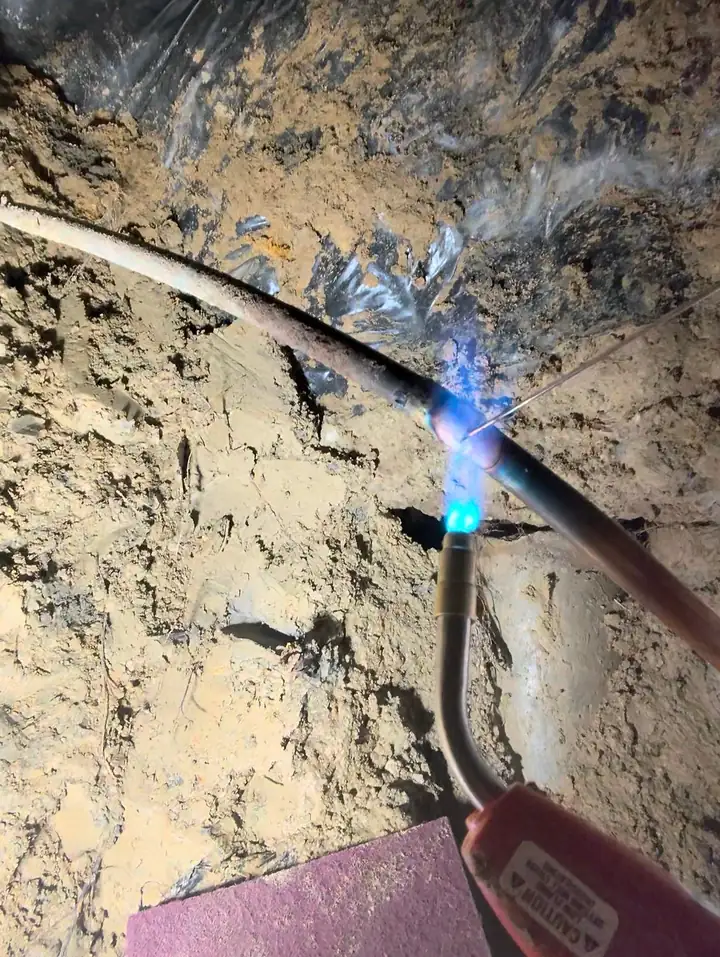
The main water line. From the meter to the house the line is copper, and in these yards it has been in the ground for thirty to fifty years. The ground moves, and the copper wears thin until pinholes open up. The pipe in the photo is from Plano: pinholes first, and then it rotted through into big holes. Tree roots do the rest, and one of the jobs below is about exactly that. The signs are a wet meter box, a meter that turns with every faucet closed, or a notice from the city about your water use. Water line repair covers how that line gets fixed. We wrote one of these up: a main line leak under a sidewalk.

Buried valves, and no PRV. In about eight of ten older houses here the main shut-off valve, or the second valve by the house, is buried, and nobody in the house knows where it is. Find it on a dry day: our main shut-off valve guide shows where it sits in houses like these. Most of these houses also have no pressure reducing valve at all. In our experience a lot of them run on high water pressure, and the homeowner doesn't even suspect it. Anything over 80 PSI wears a house out early: cartridges, fill valves, supply lines, the water heater. So the pressure has to be checked, and a gauge on an outside spigot shows it. The fix is a PRV on the main line, and PRV replacement shows how one goes in.

The City of Plano gives part of the cost back as a credit on the water bill. The rebate is half the cost of the valve, the parts and the installation, up to a limit the city sets. The conditions are the city's: a house built before 2013 that shows over 80 PSI on the city's eligibility map, a valve bought from a store inside Plano and installed by a licensed plumber registered with the city, and an itemized invoice with the plumber's license number and the installation date, received by the city within 120 days of the installation. Read them before the job, not after. The application is on the city's Water Conservation Rebates page.
What the City of Plano Requires From a Plumbing Contractor
A plumbing contractor has to be registered with the City of Plano before the city will issue a permit, with a state license and insurance on file. FPP Plumbing is registered. Replacing a water heater takes a permit and a final inspection here. So does replacing a water line or a sewer line. Changing a faucet or a washer doesn't. We pull the permit and schedule the inspection, and a job isn't finished until the inspector has signed off on it.

Under a slab the city asks for more. When a water or sewer line under a house is replaced, the plumber has to bring three things to the inspection: photos of the work, a letter signed by the Responsible Master Plumber with the license number on it, and a drawing of where the new pipe runs.
Water heaters have their own sheet at the city, and one line in it says the relief line may not drain into the pan. On one water heater replacement in Plano that's exactly what we found: the relief line from the old heater simply dropped into the pan. A pipe meant to carry that discharge stood in the wall right there, and nobody had ever connected it. We tied the relief line into it.
Four Plano Jobs, the Way They Went
Four real jobs from Plano houses: a main drain line that took twenty tries to open, tree roots around a water line, a tee that came apart underground, and a pinhole behind a water heater.
Twenty tries to get past one fitting. An emergency call in September 2026, from a house more than forty years old: every toilet, the tub and the shower had backed up, and one toilet was leaking at its base. Outside there was a single cleanout, buried, and it only led toward the city's line. We uncovered it, and that side of the line was clear, so the clog was under the house. There were no cleanouts in the walls. The camera wasn't much help: old cast iron has sharp edges at the turns, and they caught the camera and jammed it about five times. A cast iron line this old is also full of cockroaches, thousands of them.
With no other way in, we pulled a toilet. The flange was a little rusty and still good. About five feet in, the branch line meets a fitting, and at that fitting the cable kept turning up into the vent instead of down the drain. Around the twentieth try it went the right way. The line opened, and through the outside cleanout we could see the cable go past. The toilet went back on a new wax ring. The camera still couldn't get past six feet, so nobody had seen the rest of that line. To see it we would have had to go in from the vent on the roof, and the homeowner passed: a replacement of the drain lines was already planned with another contractor. A backup like this one starts as a drain cleaning call.
The roots that wrapped the water line. Water was coming up out of the meter box when the homeowner got back from vacation in September 2026, and the meter was spinning. The city had already sent a notice about the water use. The line from the meter is 3/4 inch copper, and the roots of a tree had wrapped it completely. The tree went in about thirty years ago, one of seven or eight planted in a row. Before a single root was cut, the city had its say. The homeowner sent an email stating that the tree stands on their property and belongs to them, not to the HOA. Building Inspections issued the plumbing permit and passed the tree question to Engineering, and Engineering answered that the tree could come down without a permit. In the end it stayed: the excavation crew dug under the roots and cut about a third of them. The water line itself was broken there. We replaced that section of pipe, and the city's underground inspection passed.
Then came the backflow preventer. Our repair was within 10 feet of it, and the city added a backflow inspection to the permit. The city's backflow inspector put it plainly: work that close to an existing assembly, and the assembly has to be tested. In Plano the same goes for any work on a backflow assembly or on the line ahead of it, and the city gets the report of the test. This one couldn't be tested. It sat half buried and it was rusted. The homeowner believed it was thirty-five years old, but the date stamped on it read 2015, week 23. We replaced it. Once the new assembly was in, it got tested and the test report went to the city. Then the permit was closed.
The tee that came apart. Where the copper main comes into this Plano house, it splits at a tee, and one branch runs to the outside spigot. That branch came off underground. The clip shows the dig, flooded. We replaced that piece of the main line and the piece that runs to the spigot, and changed the shut-off valve while the hole was open, so nothing in it was left to leak. The photo is the same spot after: new copper and the new shut-off valve.

The pinhole behind the water heater. The water heater here stands in a closet inside the house, and one room had a wet floor, wet enough to squish underfoot. The meter was turning with everything closed. We started narrowing it down and heard water running behind the water heater. The only way to that wall was through the heater, so the heater came out. We opened the drywall, and there it was: a pinhole in the copper supply line, spraying inside the wall. We replaced that part of the line, the leak was gone, and the heater went back in its place. Finding a leak nobody can see is what the water leak detection page is about.
Emergency Plumber in Plano: If Water Is Running Right Now
If you know where the valve is, shut the water off before you pick up the phone. In the older houses the valve by the house may be buried, and the middle of a leak is the wrong time to look for it. The city's valve in the meter box by the curb shuts off the whole house, and the city allows a homeowner to open that box for one purpose: to turn the water on or off. It takes a meter key. Our guide to the main shut-off valve shows both valves. If the sewer is backing up, stop using water in the whole house, and that includes the washing machine and the dishwasher.
The Plano line is answered at any hour. For an emergency plumber in Plano, a night call can be a pipe that broke in a freeze or a main line coming up in the tub. The first minutes of a leak or a backup are covered on our emergency plumbing page.
Plano Plumbing Service: From the Call to the Invoice
Tell us on the phone what you see, and if water is running, you hear which valve to close. On the visit the plumber finds the problem first. The price is one flat number, named before anything is opened. When the job is finished, the invoice lists the work, and the number on it is the one you agreed to. On the bigger jobs there are photos. The six steps in full are on the home page.
Plano Plumbing FAQ
Do you offer same-day plumbing in Plano?
Most days, yes. When the schedule has an opening, a weekday call gets its visit the same day, and a burst pipe or a sewer backup is moved ahead of the routine jobs. The arrival window comes on the phone, and it depends on where the plumber on duty is at that moment.
Do you repair water heaters in Plano?
Yes, gas and electric tank water heaters, repair and replacement. A lot of repairs are small: a relief valve, or a heating element on an electric unit. Expansion tanks fill with water and get replaced. When the tank itself leaks, the heater gets replaced, with a city permit and a final inspection. A tank also wants a flush once a year, and that's the maintenance almost nobody does.
How much does it cost to have a plumber come out in Plano?
On a weekday it's $49. That's the service call: the trip and finding the problem, and the $49 comes off the bill when you approve the repair. Evenings, weekends and holidays cost more: there's an emergency fee tied to the hour, and the amount is named on the phone before the plumber heads out. Nobody drives out for free to write an estimate.
How do I pay for a plumbing repair in Plano?
After the work is done, and in the way that suits you: a card, Apple Pay, PayPal, Zelle, Venmo, a check or cash. Zelle, a check and cash add nothing to the bill. A card adds a processing fee, and you're told the amount before you pay. A bigger job can be spread out through PayPal Pay Later or Klarna when they approve it, and that decision is theirs. The total is the flat price you approved before the work started.
Water is leaking at my water meter in Plano. Is that my pipe or the city's?
It depends on which side of the meter the leak is on. The meter itself and the pipe on the street side of it are the city's, and the city repairs them. From the meter to the house the line is yours, and a leak on that side is the homeowner's to fix. Water standing in the meter box can be either one, so call the city's utility department first. If they say it's on your side, that's a job for a plumber.
Will the City of Plano lower my water bill after a leak is fixed?
It can. The city offers a water credit after a repaired leak when the leak pushed one bill more than 30,000 gallons over your average. The request has to go in within 90 days of the repair, with the repair invoice attached, and the city allows one credit per address in 24 months. Our invoice describes the repair, and that's the document the city asks for. Pool leaks aren't covered.
How does an emergency plumbing call work at night in Plano?
The same way as a day call, with one more number. A person answers, asks what is happening, and tells you what to shut off. Before a truck moves you hear two things on the phone: the emergency fee for that hour and the arrival window. The emergency plumbing page has the rest.
What Plano homeowners say about FPP Plumbing
Their words, not ours: four reviews, unedited, each one linked to the place where it was posted.
Reviews
I have used FPP now 3 times. I live at Shops at Legacy. FPP answers there phone immediately. They give you an estimate over the phone which is accurate. Excellent pricing. They come immediately and do professional work. They fixed an upstairs toilet. Changed my outdoor faucet. I just had a clog in my upstairs sink and they came immediately. It’s like old time professional service. I highly recommended them!! Satisfied customer in Plano.
★★★★★ · Plano · August 2026 · Google
Read on Google
PRV replacement in Plano made a huge difference for us. Our water pressure dropped to about 30 PSI, and taking a shower was getting really annoying. I called the city first, and they told me it was probably a bad PRV. FPP Plumbing came out, replaced the PRV and the shutoff valve, and now we’re right around 60 PSI. Finally feels like a normal shower again. Good guys, solid work.
★★★★★ · Plano · Local Guide Level 5 · June 2026 · Google
Read on Google
FFP saved me Friday night after hours when a stopped drain lead to water damage. Quick response minimized damage. Also did an excellent job rebuilding a toilet for me.
★★★★★ · Local Guide Level 4 · July 2026 · Google
Read on Google
I called several plumber for replacement of a washer machine valve and this FPP plumbing compony was the only one that his price was a lot reasonable than the others. He came the same day in less than an hour. Very professional i highly recommend them and I will use them again for any pluming work.
★★★★★ · July 2025 · Google
Read on Google
Our Plumbing Office in Plano, TX
FPP Plumbing, 5700 Tennyson Pkwy, Suite 300, Plano, TX 75024, in the Legacy area. The call button at the top of this page dials the Plano line. The office is open 8 AM to 5 PM, Monday to Friday, and emergency plumbing calls are answered 24/7, holidays included. We're a local plumbing company with four to five licensed plumbers on staff, and two of them are on every shift. From here we cover all of Plano: ZIP codes 75023, 75024, 75025, 75074, 75075 and 75093, and the Plano corner of 75094, from the 1960s streets east of Highway 75 to Willow Bend and Legacy West. The license behind the work is our Responsible Master Plumber license, M-44816.

FPP Plumbing Plano office
5700 Tennyson Pkwy, Suite 300
Plano, TX 75024
24/7 emergency plumbing: nights, weekends and holidays
Office hours: Monday to Friday, 8 AM to 5 PM
request@fppplumbing.com
To reach a plumber in Plano, TX, use the Plano line: the button is at the top of this page, and it's answered day and night. If you'd rather write, send the Request Service form. Either way, nothing starts until you've heard the price.