

Signs of a Hidden Water Leak
A leak you cannot see still leaves evidence. These are the ones that bring people to this page:
- A water bill that jumped, then jumped again, while nobody in the house changed a habit.
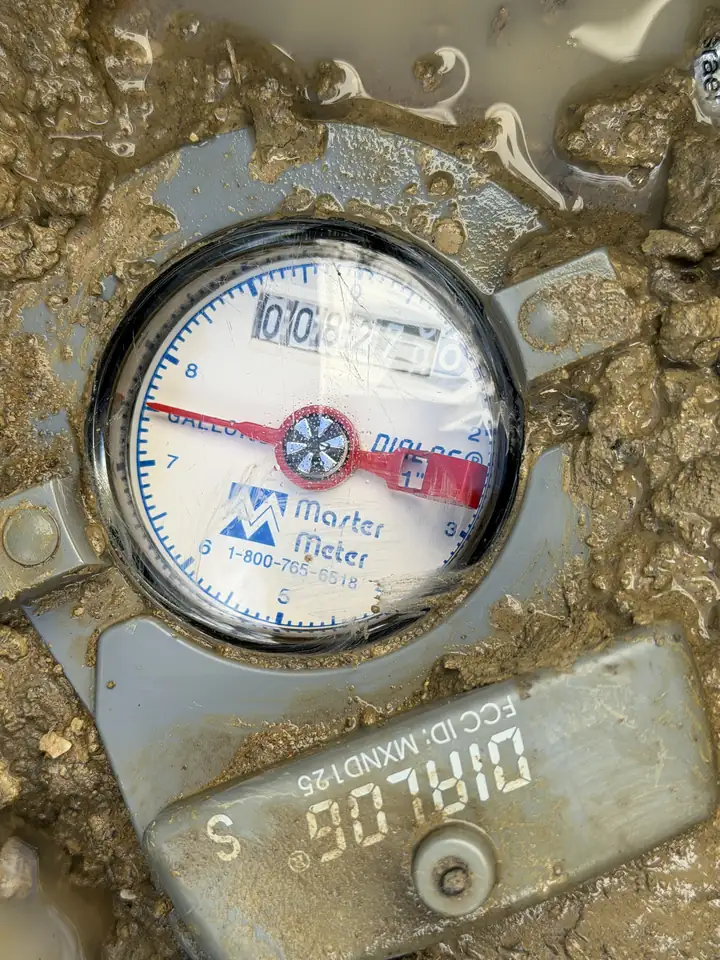
- The small leak indicator on the water meter turning after every fixture, the irrigation and the ice maker are shut off.
- A musty smell in one room that cleaning does not fix, a patch of drywall that feels cool or soft, or paint bubbling low on a wall.
- A ceiling stain under an upstairs bathroom that comes back after it is painted over.
- Water pressure that dropped in the whole house for no reason.
- A warm patch of floor, or flooring that stays damp with nothing spilled on it.
- Grass greener along one strip of the yard, a spot that never dries, or water seeping at the edge of the foundation.
- A water heater that runs far more than it used to, because a hot side leak is pulling heated water out around the clock.
Not sure whether the bill is a leak, a rate change or a teenager’s showers? Our guide on why your water bill is suddenly high walks through how to tell before you spend anything.
The Water Meter Test You Can Run Tonight
This takes ten minutes and it tells you whether to call at all. Shut every faucet, make sure no toilet is running, no washer or dishwasher is mid cycle, the irrigation controller is off and the ice maker is not filling. Find the meter, usually in a box near the curb, lift the lid, and look for the small leak indicator on the dial, a little triangle, star or wheel. If it is turning with the whole house shut, water is leaving the system somewhere between the meter and your fixtures.
Now close the main shut-off valve at the house, the one at the wall where the line comes in or in the box by the foundation. If the indicator stops, the leak is inside or under the house. If it keeps turning with the house valve closed, the leak is in the yard, on the line between the meter and the house, and our yard leak guide shows what to look for out there. Either way, that one test tells us where to start and cuts an hour off the visit.
How Water Leak Detection Works: Isolation, Pressure Test, Acoustic, Thermal
Isolation. A house is not one pipe. It is a cold system, a hot system fed from the water heater, a service line from the meter, sometimes an irrigation loop and a line to the pool. We close valves one at a time and watch the meter. Shut the cold inlet on the water heater and the meter stops? The leak is on the hot side, and the search just got half as big. Close the irrigation valve and it stops? You do not have a plumbing leak, you have a sprinkler leak, and that is a different repair. Half the time this step alone rules out the slab and points at something cheaper.
Pressure testing. With the suspect section isolated we put a gauge on it, bring it to pressure, and watch. A line that holds pressure is not leaking, full stop, and we move on. A line that bleeds down is the problem, and how fast it bleeds tells us how big the hole is. On a line we need to hear, we put air on it: a pinhole that is silent under water pressure hisses under air, and that hiss carries through concrete and framing.
Acoustic listening. Water or air escaping a pressurized pipe makes a sound at the point of escape. On a slab we work the floor in a grid with a ground microphone and follow the signal to its loudest point. Inside a wall we use a listening rod against the drywall along the path of the pipe. The loudest point is where the pipe failed, and on a slab that is often several feet from the warm spot or the wet spot, because the water traveled before it surfaced.
Thermal camera and moisture meter. A hot water leak leaves a heat trail the camera sees through tile, wood and drywall, and it also shows us the path of the hot line so the microphone goes where the pipe actually runs. A moisture meter then maps how far water has already spread behind a finished surface, which tells us not just where the pipe failed but how much of the wall or floor it has reached. That map is what your insurance adjuster and your restoration company work from.
Pipe locating. A transmitter clipped to the copper puts a signal on the pipe, and a receiver traces its path across the floor or the yard, so we are listening on the line and not three feet to the side of it. It also finds the depth of a service line before anyone digs.
And then the part no tool replaces: knowing how builders in Plano, Frisco and McKinney ran their lines in the 1990s, the 2000s and last year, which walls carry the water heater feed, where the sleeves come up through the slab, and how far water travels under concrete before it shows. We have done this in enough houses here to read the readings.
Why the Water Shows Up Far From the Leak
This is the single most expensive misunderstanding in leak repair. Water does not surface where the pipe failed. Under a slab it follows the outside of the pipe, runs inside the sleeve where the pipe comes up through the concrete, spreads through the gravel bed, and comes up through whatever crack, joint or penetration lets it. Inside a wall it runs down the pipe and the framing, gets wicked sideways by drywall and insulation, and stains the ceiling of the room below at the low point, which can be a full room away from the fitting that let go. In an attic, insulation holds gallons before a drop reaches the ceiling, and the stain appears wherever the insulation finally gave up.
Open the wall at the stain, or cut the floor at the wet spot, and you own a hole plus the same leak. We locate first and open last. When we mark a spot, that mark is where the pipe failed, and it is what we stand behind.
Leaks Under the Slab
A copper water line under the foundation with a pinhole in it is the most common hidden leak in the older parts of Plano and McKinney and in the first Frisco neighborhoods, and the detection has its own rhythm: the hot and cold split at the water heater, a pressure test on each side, air on the losing side, and the ground microphone in a grid across the floor. The repair that follows, tunneling under the foundation to the marked spot, cutting out the corroded copper and brazing in new pipe, is its own job and its own page: slab leak repair. Here, the point is that nobody touches your floor until the leak has a mark on it.
Leaks Inside Walls and Ceilings
The hidden leaks inside a house are mostly small, and small is what makes them dangerous. A nail shot through a PEX line when someone hung a cabinet: it sealed itself for months, then the nail rusted and the line let go all at once. A copper line in an exterior wall worn to a pinhole by a rock the foundation had pushed against it, found by a listening rod along the path the thermal camera showed. A shower valve body or a tub spout drop leaking into the wall cavity a little every time someone showers, dry by morning, never a puddle, mold behind the tile for a year.
Bathrooms above living space are their own category. A toilet flange seeping into the ceiling of the room below: the bathroom upstairs looked spotless, the drywall underneath was black with mold and the joists were soft. On those we map the ceiling with the moisture meter, dye test the toilet, run the shower and the tub separately, and open one small inspection hole where the readings agree, not a whole ceiling. If the last thing done in that bathroom was a remodel, read our water leak from the ceiling, guide first, because unlicensed work left three separate leaks behind finished walls in one Frisco home we tested.
Leaks in the Yard and at the Foundation
When the meter keeps turning with the house valve closed, the leak is on the service line between the meter and the house. The locator traces the line and finds its depth, the ground microphone finds the loudest point along it, and the spot is marked in the grass rather than guessed by digging along the whole run. The failure we see most often on that line is right where it enters the house: copper set straight into the concrete of the foundation with no sleeve, corroded through by the concrete itself and worked by the slab moving against it. That repair, and the question of which side of the meter is yours to fix, are on our water line repair page.
Leaks That Are Not Supply Lines at All
A surprising share of leak calls are not a pressurized pipe. An air conditioner condensate line draining behind a wall, or into a bathroom sink line that is too narrow to take it, which shows up every July. A cracked ice maker line under the fridge, dripping onto the subfloor for a season. A tile shower pan whose liner has failed, which we test by plugging the drain, filling the pan and watching the ceiling below. A water heater T&P valve discharging into a pan with no drain line. A roof or window flashing leak that only appears after rain and looks exactly like plumbing until you check the weather. We test for all of it before we call it a pipe, because a plumbing repair does not fix a roof.
Drain Line Leaks: Hydrostatic Testing
The drain lines under your slab carry water without pressure, so they never hiss, never show on the meter and never wet a floor. They leak into the soil. Over years that washes fines out from under the foundation, and the first symptom is a crack in the brick or a door that sticks, not anything wet. This is why foundation repair companies in Plano, Frisco and McKinney require a hydrostatic test before and after leveling a house.
The test: the main line is plugged at the cleanout with a test ball, the drain system is filled with water to slab level, and the level is watched. If it holds, the drains are tight. If it drops, a line under the house is leaking, and the system is isolated section by section with more test balls until the losing run is found, then confirmed with a camera. The repair that follows is on our sewer line repair page. If your foundation is moving and the water lines have already checked out, this is the test that is still missing.
Silent Toilet Leaks and the High Water Bill
The most common answer to a mysterious bill is the least dramatic one. A toilet flapper that no longer seals lets water trickle from the tank into the bowl and straight down the drain, silently, hundreds of gallons a day, and the meter turns without a drop showing anywhere. Dye in the tank finds it in ten minutes: color in the bowl without flushing means the flapper is leaking. That was the whole story behind a Frisco water bill that had doubled, and the fix is toilet repair, not detection equipment. We check every toilet in the house before the acoustic gear comes off the truck, because finding an expensive problem where a cheap one exists helps nobody.
What Happens After We Find the Leak
Detection ends with a marked spot, photos, and a set of numbers. Where the repair goes from there depends on what we found. Under the foundation becomes slab leak repair. Between the meter and the house becomes water line repair. A shower valve, a supply stop or a tub spout becomes shower valve repair, and a flange or a flapper becomes toilet repair. One plumber, one visit, no hand-off to a second company.
Before we leave we put a gauge on the house. A lot of the leaks we find were caused by pressure sitting above 80 PSI, and when the gauge says so, PRV replacement is the conversation that keeps the next leak from happening.
What Leak Detection Costs
A weekday visit starts with a $49 service call that rolls into the work if you go ahead with us. The detection itself is quoted before equipment comes off the truck, once the meter test and a walk through the house tell us how big the search is: one bathroom above a stained ceiling is not the same search as a three thousand square foot one story with a quiet slab leak. Whatever the detection finds, the repair is priced separately and approved separately. After hours there is an emergency fee that depends on the time of night, stated on the phone before we roll.
The comparison worth making is not detection versus no detection. It is a located leak versus a guess. We have opened walls after other people already opened the wrong one, and the homeowner paid for both. Finding it first is the cheap part of this job.
Leak Detection Across Plano, Frisco, McKinney and the North Dallas Suburbs
The oldest copper and the most slab leaks on our schedule belong to a plumber in Plano out of our Tennyson Parkway office, and to a plumber in McKinney working the established streets around downtown. A plumber in Frisco from Westridge Boulevard carries the same acoustic, thermal and locating gear to everything from the first Frisco subdivisions to last year’s builds. The same equipment rides to a plumber in Allen call, to a plumber in Prosper or a plumber in Celina call where the leak is usually somebody else’s workmanship, and across the lake to a plumber in Little Elm, a plumber in The Colony, a plumber in Carrollton or a plumber in Lewisville with a bill that makes no sense.
Water Coming Through a Ceiling Right Now?
Close the main valve first. If you have never found it, the shut-off guide shows the setups used in homes here with photos, and it takes two minutes. Then call. An active leak goes to the front of the schedule, our emergency plumbing line is answered by a person at any hour, and detection still happens, it just happens faster.
FAQ Water Leak Detection
How do plumbers find a hidden water leak?
By elimination, not by opening walls. First the meter proves water is leaving the system. Then the house is split into sections, hot, cold, the service line from the meter, the irrigation loop, and each one is shut off in turn to see which one stops the meter. The suspect line is pressure tested with a gauge, and if it bleeds down, air pressure on that isolated line makes the leak loud enough to hear through concrete or drywall with a ground microphone or a listening rod. A thermal camera follows a hot line, a moisture meter maps how far the water has spread, and the result is a mark on your floor or wall, not a guess.
My water meter is moving with everything off. Is that always a leak?
Almost always, but check three things first: an irrigation zone running on a schedule, a toilet with a flapper letting water past, and a water softener or ice maker in the middle of a cycle. If those are quiet and the small leak indicator on the meter still turns, water is escaping somewhere between the meter and your fixtures. Then close the main valve at the house: if the meter stops, the leak is inside or under the house, if it keeps turning, it is in the yard between the meter and the house.
Can you find a leak under a concrete slab without breaking it?
Yes. A pressure test on the isolated line tells us the loss is under the slab and not in a wall, and a ground microphone on the floor finds where the escaping water is loudest, which is where the pipe failed, not where the floor happens to be wet. Nothing is opened until the spot is marked, and the repair itself usually reaches the pipe by tunneling under the foundation from outside rather than through your floor.
What is a hydrostatic test and when do I need one?
A hydrostatic test checks the drain lines under the slab, the pipes nobody thinks about because nothing is under pressure in them. We plug the main line at the cleanout, fill the drain system with water up to slab level, and watch whether the level holds. If it drops, a drain line under the house is leaking into the soil. Foundation repair companies require this test before and after leveling a house, and it is the right test whenever a foundation is moving and the water lines have already checked out.
How long does leak detection take?
Most houses take one to three hours to isolate and locate. A large one story home with several zones, a slab leak that is quiet, or a leak that only shows at certain times of day can take longer or need a second visit. You get a real time frame once the meter test and the first round of isolation are done, and you are told before any of it turns into extra hours.
Do you repair the leak after you find it?
Yes. We are licensed plumbers, not a detection only company, so the same plumber who marks the leak prices the repair on the spot: a slab leak, a main water line, a fitting inside a wall, a shower valve, a toilet flange. In most cases the repair starts the same day, and there is no second company and no second service call.
If the bill says leak and the house says nothing, call or text FPP Plumbing. We isolate it, we test it, we mark it, and you see the repair price before anything is opened.