
If your angle stop valve leaking under sink starts the moment you touch it, you’re experiencing a common plumbing issue caused by years of mineral buildup and deteriorated rubber seals. That under sink shut off valve leaking wasn’t broken until you turned it-the corrosion and hard water damage had created a fragile seal that finally gave way. This guide explains why untouched valves suddenly fail when operated and provides step-by-step instructions to replace them before a simple faucet upgrade becomes a flooding emergency.
You’re finally ready to replace that old kitchen faucet. You reach under the sink to shut off the water supply, grab the valve handle, and give it a turn. Immediately, you hear dripping. Then you see water pooling around the valve connection. What was supposed to be a simple DIY project just became a plumbing emergency.
This scenario plays out in homes across Frisco, Plano, McKinney, and surrounding North Texas communities almost daily. The culprit? That innocent-looking shut-off valve under your sink has been sitting there for years, quietly corroding from the inside out. Hard water loaded with minerals has been doing its damage, and the rubber components inside have dried out and cracked.
The valve worked fine as long as nobody touched it. But the moment you tried to turn it, you broke the fragile seal that was barely holding back the water pressure. Now you’re dealing with a leak that won’t stop until you replace the entire valve.
Let’s talk about why this happens so often, what types of shut-off valves you’ll find under your sink, and what actually works when it’s time to replace one.
Why Older Shut-Off Valves Start Leaking the Moment You Touch Them
Most shut-off valves under sinks in North Texas homes fail for the same reason: they’ve been sitting in the same position for five, ten, sometimes fifteen years without ever being turned. During that time, our hard water has been slowly destroying them from the inside.
The minerals in Texas water, primarily calcium and magnesium, build up on every surface they touch. Inside a shut-off valve, these deposits coat the valve stem, the threads, and the internal components. The valve stem is the part that moves up and down or rotates when you turn the handle. Over time, mineral deposits essentially glue it in place.
At the same time, the rubber washers and O-rings inside the valve are deteriorating. These rubber components need moisture and occasional movement to stay flexible. When a valve sits unused for years, the rubber dries out, hardens, and eventually cracks. The seal that prevents water from leaking past the valve stem just disappears.
When you finally need to use that valve, you’re forcing a mineral-encrusted stem to move through dried-out rubber seals. The stem might break free from the mineral deposits, but those cracked rubber seals can’t hold back water anymore. Sometimes the force required to turn the valve actually cracks the valve body itself, especially on cheaper brass valves that have corroded internally.
We see this constantly on service calls in Allen, Little Elm, and Prosper. A homeowner calls because they tried to shut off water to replace a faucet, and now water is spraying from the shut-off valve. The valve worked perfectly fine for a decade as long as nobody touched it. But that first turn after years of sitting still broke the seal permanently. Understanding how to shut off your main water valve becomes critical in these emergency situations.
The problem is worse with old multi-turn gate valves. These require several full rotations to open or close. The gate inside the valve has to slide up and down through mineral deposits, and the rubber seal around the stem has to flex with every turn. After years of hard water exposure, the gate won’t seat properly anymore, and the stem seal leaks no matter how much you tighten it.
The Three Types of Shut-Off Valves Under Your Sink
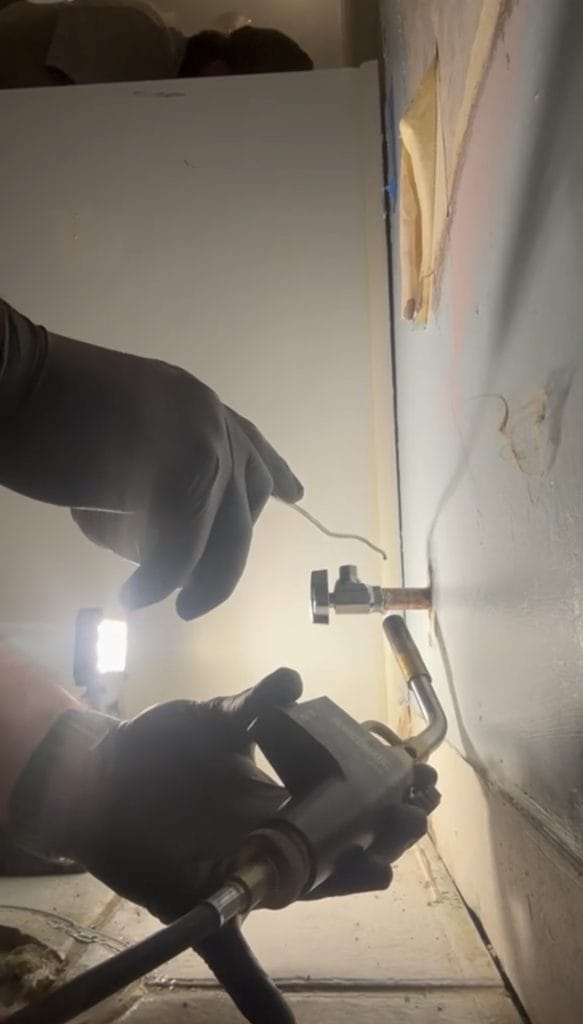
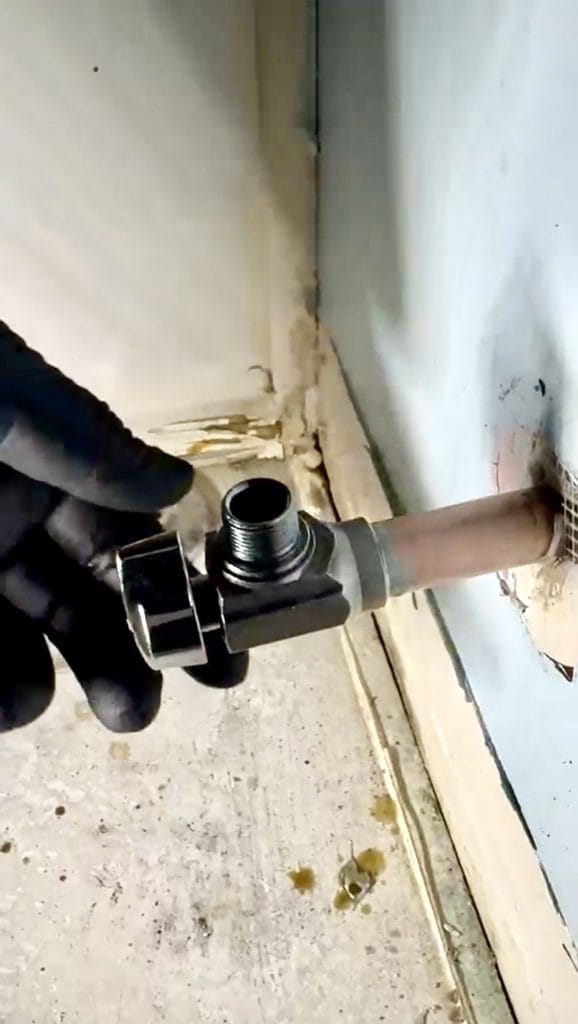
When it’s time to replace a leaking shut-off valve, you’ll encounter three main types. Each has different installation requirements and reliability, and understanding the differences matters for getting a repair that actually lasts.
Soldered (Sweat) Shut-Off Valves: This is the professional-grade option and the most reliable long-term solution. A soldered valve is permanently attached to the copper pipe using heat and solder. The plumber cuts out the old valve, cleans the copper pipe, applies flux, slides on the new valve, and uses a torch to melt solder into the joint. When done correctly, this creates a permanent, leak-proof connection that will outlast the valve itself.
The advantage is reliability. There are no compression rings to fail, no rubber O-rings to degrade, just solid copper-to-brass connection. The disadvantage is that you need a licensed plumber with proper tools and experience. You can’t just unscrew it and put in a new one. It requires cutting, torch work, and making sure you don’t damage nearby cabinets or walls with the heat.
Compression Shut-Off Valves: These are the most common type in older homes around McKinney and Frisco. A compression valve uses a brass ring called a ferrule that gets compressed onto the copper pipe when you tighten the valve nut. The ferrule bites into the copper and creates a watertight seal.
Compression valves can work well, but only under the right conditions. The copper pipe must be perfectly clean, smooth, and undamaged. Any corrosion, scratches, or pitting on the pipe surface will prevent the ferrule from sealing properly. If someone previously removed a compression valve from that same spot, there’s already a ferrule mark on the pipe, and installing another compression fitting in the same location rarely seals correctly.
We see compression valve failures regularly. A homeowner buys a replacement valve from the hardware store, removes the old one, and installs the new compression valve without properly cleaning and inspecting the copper pipe. The ferrule can’t seal against the rough surface, and water starts leaking from the connection immediately or within a few days. This is similar to problems we encounter with shower valve leaks where improper installation leads to bigger issues.
Push-Connect (Quick Connect) Shut-Off Valves: These are the fastest to install and the most popular with handymen and DIYers. You simply cut the pipe, push the valve onto the copper, and it’s done. Internal grab rings and O-rings create the seal. No torch, no compression nuts, no special tools required.
The problem is reliability over time. Those internal O-rings are rubber, and they’re exposed to the same hard water that destroys other rubber components. The grab rings can also loosen slightly over years of water pressure and temperature changes. Push-connect valves often work fine for two to five years, then start developing slow leaks or fail completely when you try to shut them off.
I’ve responded to service calls where a push-connect valve was installed just a couple of years earlier, and the homeowner barely touched it to shut off water for a repair. The valve immediately started spraying water from the connection. The O-rings had degraded enough that any movement broke the seal.
For a quick temporary fix or a rental property where you need something fast and cheap, push-connect can work. For your own home where you want a repair that lasts ten to twenty years, soldered valves are worth the extra cost of professional installation.
Real Problems We See on Service Calls
Let me share a few actual situations we’ve dealt with recently. These are the kinds of problems that happen when shut-off valve replacement goes wrong.
A homeowner in Plano called because his kitchen sink shut-off valve was leaking. He’d watched a YouTube video and bought a compression valve from the hardware store. He removed the old valve, which had been there for probably fifteen years. The copper pipe had visible corrosion and some pitting from mineral deposits. He didn’t clean the pipe properly, just wiped it with a rag. He installed the new compression valve, tightened it down hard, and turned the water back on.
Water immediately started leaking from the ferrule connection. He tightened it more. The leak slowed but didn’t stop. By the time we arrived, he’d overtightened the compression nut so much that he’d actually deformed the ferrule and scored the copper pipe even worse. We had to cut out that section of pipe and install a soldered valve because the pipe surface was too damaged for any compression fitting to seal.
Another call came from a homeowner in Frisco who had a push-connect shut-off valve installed by a handyman about two years earlier. The valve had worked fine until she needed to shut off water to replace her faucet. She turned the quarter-turn valve handle, and water immediately started spraying from where the valve connected to the copper pipe. The internal O-rings had degraded just enough that any movement of the valve broke the seal.
We also see old multi-turn gate valves that simply won’t close all the way anymore. A property manager called about a rental house in Little Elm where the bathroom sink shut-off valve wouldn’t stop water flow even when fully closed. The gate valve was probably original to the house, at least twenty years old. Mineral deposits had built up so thick inside that the gate couldn’t seat properly against the valve body. Water kept flowing even with the handle turned all the way off. The only solution was complete valve replacement. We’ve documented similar toilet replacement projects with new shutoff valves that show why proactive replacement matters.
When to Replace vs. When to Call a Plumber
If you’re handy and the conditions are right, you can replace a shut-off valve yourself. But you need to honestly assess the situation first, because a failed DIY valve replacement often costs more to fix than just calling a plumber in the first place.
You might be able to handle it yourself if the copper pipe is in good condition. That means clean, smooth, no visible corrosion or pitting, and no previous ferrule marks if you’re using a compression valve. If you’re going with a push-connect valve, understand that it’s a temporary solution that might need replacement again in a few years.
You should call a professional plumber if the copper pipe shows any damage, corrosion, or rough spots. Compression and push-connect fittings won’t seal reliably on damaged pipe. A soldered valve is the only solution that will last, and that requires proper tools and experience.
Call a plumber immediately if you have an active leak you can’t stop. Don’t try to force a stuck valve or overtighten a leaking connection. You’ll make the damage worse. Shut off the main water supply to your house and call for help. Our emergency plumbing services are available when you need immediate assistance.
Also call a plumber if the shut-off valve is stuck in the wall or in a tight space where you can’t access the pipe properly. Some under-sink valves are installed so close to the wall that you can’t get a pipe cutter in there, or the valve is soldered and you’d risk damaging drywall or cabinets with torch work.
For homes in Frisco, Plano, McKinney, and surrounding areas, the hard water issue makes soldered valves the best long-term investment. Yes, it costs more upfront than a push-connect valve you install yourself. But you’re getting a repair that will last fifteen to twenty years instead of failing again in two to five years.
Getting Reliable Shut-Off Valve Replacement in North Texas
If your under-sink shut-off valve is leaking or stuck, don’t force it and make the problem worse. The valve has likely been deteriorating for years from hard water and age, and trying to repair it yourself might turn a simple valve replacement into damaged pipes and water damage.
For homes in Frisco, Plano, McKinney, Allen, Little Elm, Prosper, and nearby communities, the best long-term solution is usually a professionally installed soldered valve. It costs more than a quick-connect valve from the hardware store, but you’re getting a repair that will actually last. If you’re dealing with a leaking shut-off valve, a reliable plumber Frisco can take care of it properly and prevent future issues.
At FPP Plumbing, we handle shut-off valve replacement regularly and can assess whether your pipes need a simple valve swap or if there’s underlying damage that needs attention. We’ll explain your options honestly, show you the condition of your pipes, and give you a repair that’s done right the first time. If you’re nearby, a trusted plumber Plano can handle the job quickly and correctly. Learn more about our services or call us when you need a reliable licensed plumber who shows up on time and fixes it properly.
Why is my shut-off valve suddenly leaking?
Because you finally touched it. If it hasn’t been used for years, the seals dry out. You turn it – it starts leaking.
I tried to shut the water off and now it’s leaking - what do I do?
First – don’t panic. Try tightening the packing nut a little. If it still leaks, the valve is done and needs to be replaced.
Can I just leave a small leak for now?
Bad idea. Even a small drip turns into damage – cabinets, floor, mold. It won’t fix itself.
