
Knowing how to turn off the water to your house can save you thousands in water damage when a plumbing emergency hits. This guide walks you through the two or three shutoff spots in a typical North Texas home at the street meter, near the house, and sometimes inside the garage, so you’re ready when something lets go at 1 AM instead of frantically searching while water floods your floors.
Quick note: A bunch of our customers have asked us to actually show them what these valves look like and where to find them, so we added real photos from our own jobs here in Frisco, Plano, and McKinney. Hopefully it makes this a whole lot easier to follow.
Picture it: you’re standing in your garage at 1 am, water spreading across the concrete, and you have no clue where to turn it off. I’ve taken that emergency call more times than I can count across Frisco, Plano, McKinney, and Little Elm. The homeowners who already know where their shutoff valves are and how to use them, save themselves thousands in water damage and a ton of stress. The ones who don’t are watching water pour out while searching YouTube on their phone.
Here’s the thing, shutting off your main water valve isn’t complicated, but it’s a little different depending on your home’s age and where it’s built. Most North Texas homes have two shutoff points: one out by the street at the meter, and one closer to the house. Newer homes often have a third one right inside the garage. Let me show you each one.
Step 1: Find Your Main Water Meter Box Near the Street
Walk out to your front yard, near the street or the sidewalk. You’re looking for a round box — usually heavy plastic sitting flush with the ground. That’s your main water meter box, and it’s the city’s shutoff for your whole property.
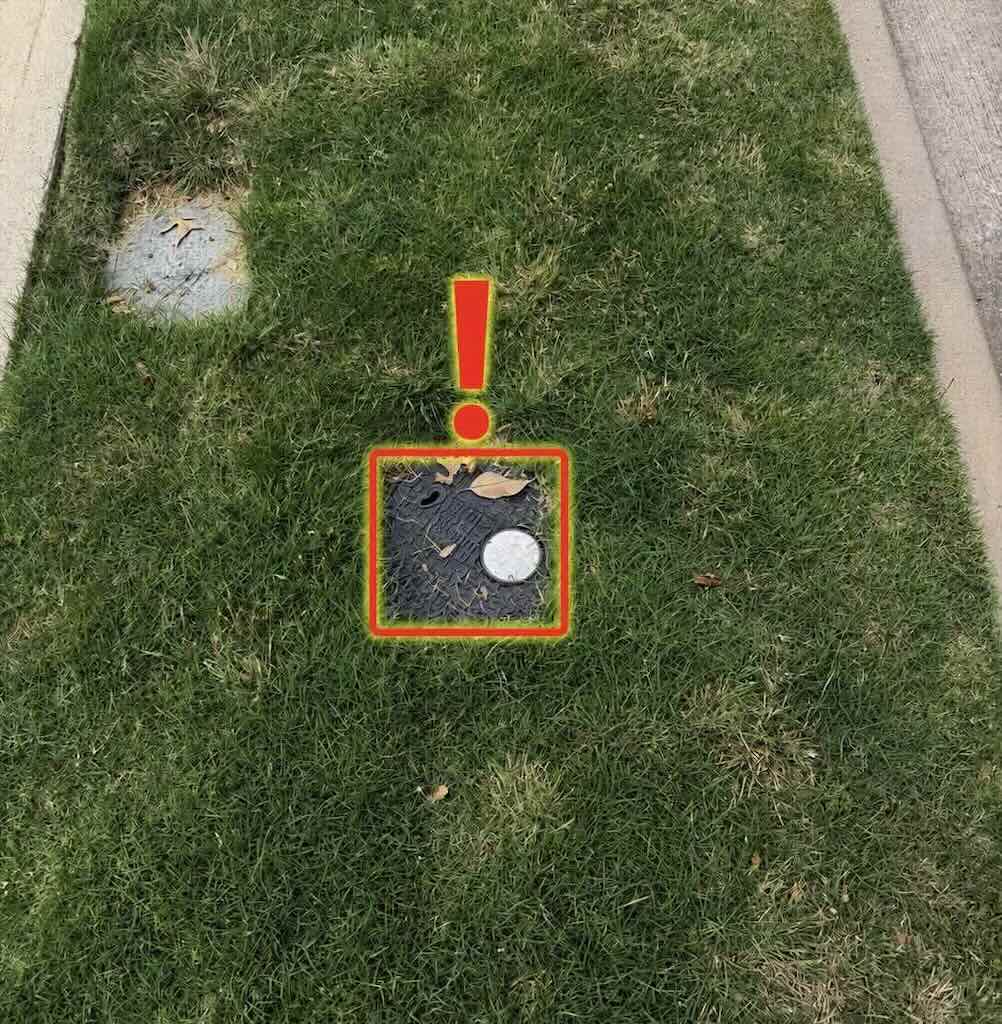
In most Frisco, Plano, and McKinney neighborhoods these boxes sit between the sidewalk and the street, lined up with your property line. The lid might say “water” or it might be plain. Sometimes grass or dirt covers the edges, so you may have to poke around to find it.
To open it and shut the water off, you’ll normally use two tools.
The first is a meter box lid key, a long metal hook that unlocks and lifts the heavy lid. This one does NOT shut off water, it just gets you into the box.
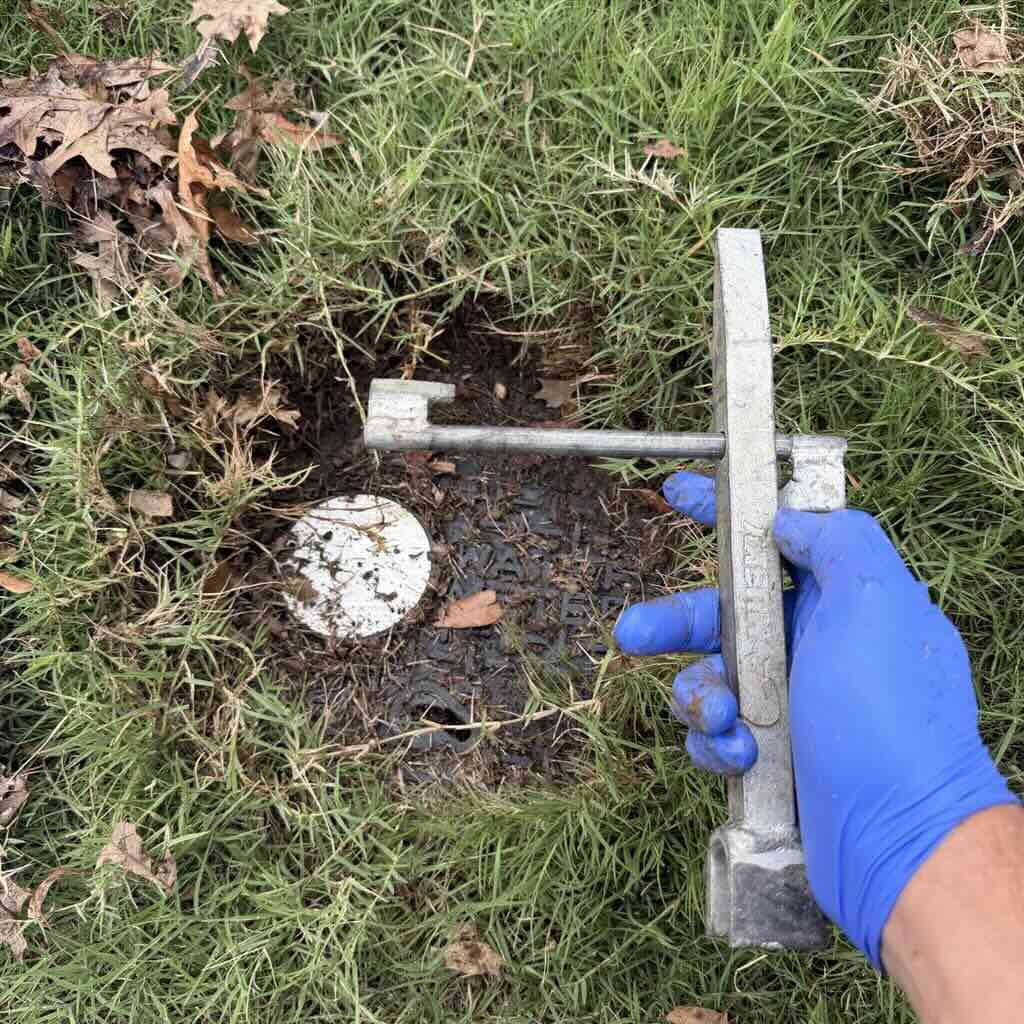
Once the lid’s off, you’ll see the meter itself plus the pipes coming in from the street. The main shutoff valve is right there on one of those pipes.
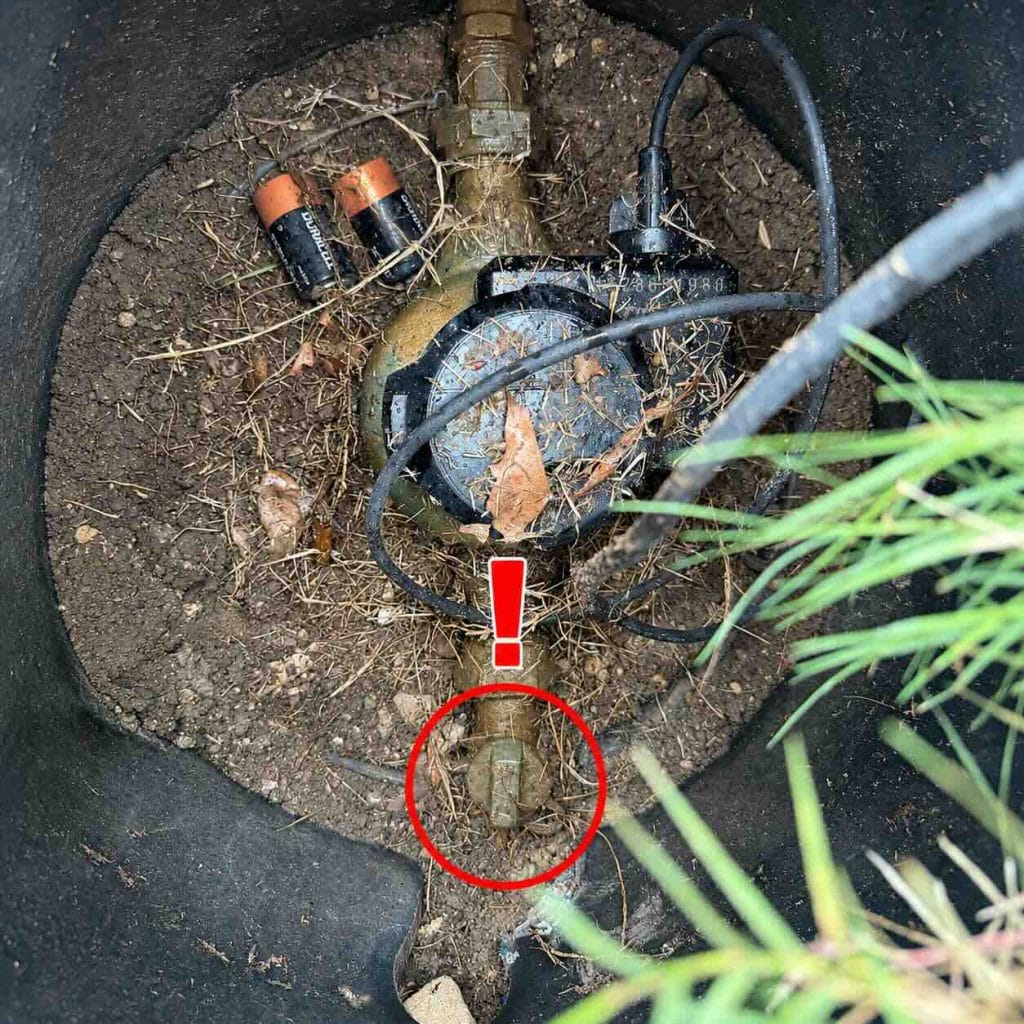
The second tool is a water meter shutoff key a long T-shaped wrench that reaches down into the box and turns that main valve. Turn it clockwise to shut the water off.
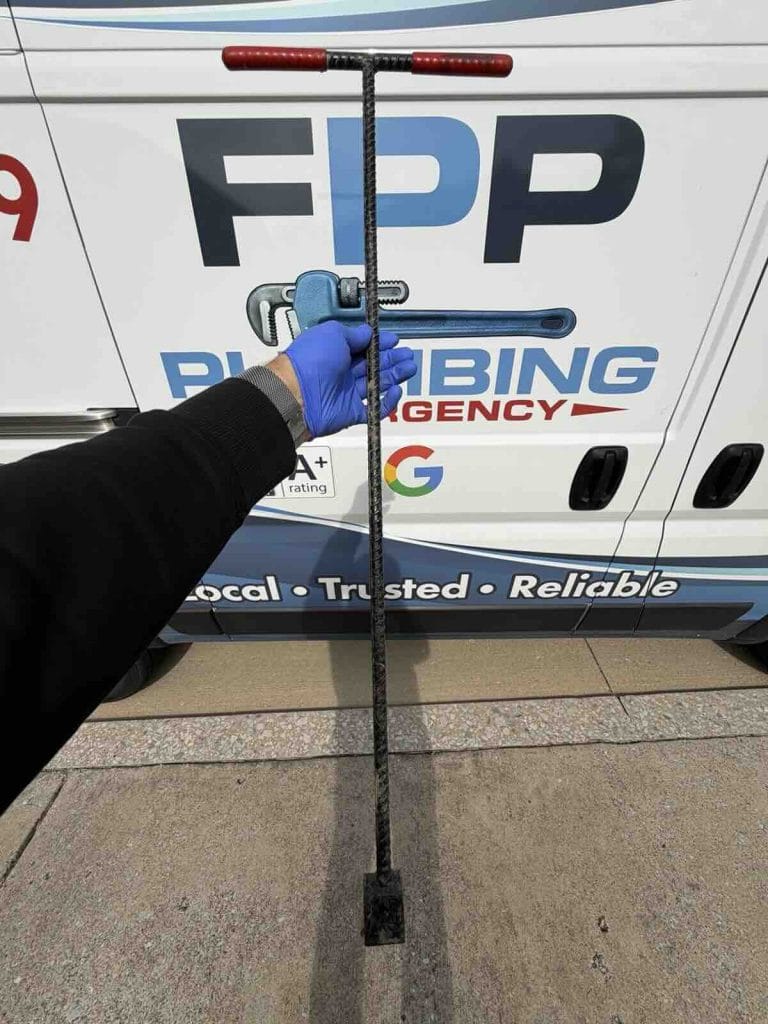
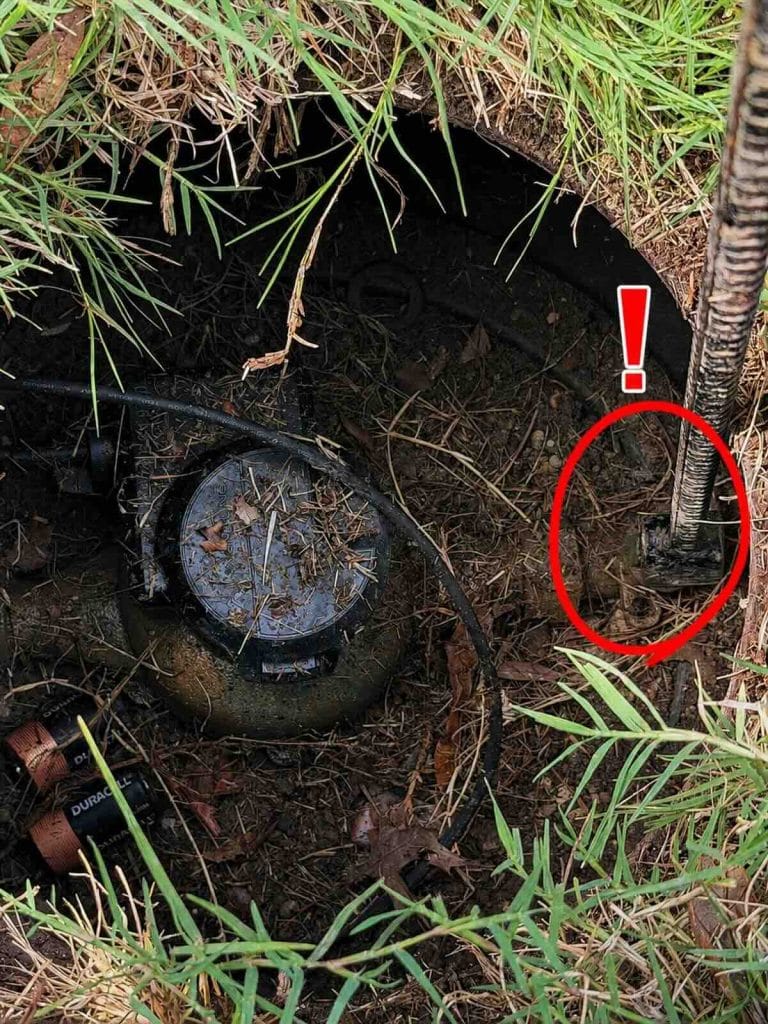
The T-shaped water meter key reaches down to the main valve and shuts it off.Turn clockwise to close.
Both tools are cheap and sold at any hardware store. I’d keep them somewhere easy to grab, like the garage, because when you need them, you need them fast. You can grab a meter key here on Home Depot or any local hardware store.
Don’t have the tools but you’re handy? A couple of workarounds in a pinch: if you don’t have the lid key, you can sometimes slide a flathead screwdriver into the lock slot and pop the lid open that way. And if you don’t have the T-key for the valve, you can sometimes get the main valve closed with a regular wrench. Not ideal, but in an emergency it beats watching your house flood.
Just know shutting off here is your nuclear option. Nothing in the house gets water: no toilets, no sinks, no outside faucets. It’s the right call when you’ve got a major leak and can’t reach the closer valve, or that closer valve won’t work. But for most situations, you’ll want the secondary shutoff instead.
Step 2: Find Your Secondary Shutoff Valve Near the House
This is the one you’ll actually use most of the time. It’s closer to the house, easier to get to, and doesn’t need any special tools. The catch, it’s usually tucked into a small underground box, and most folks have no idea it’s there.
Start by scanning your front or side yard for two white PVC pipes sticking up out of the ground, those are your sewer cleanouts. In North Texas, your secondary water shutoff is almost always near these. Whoever installed your system put everything in the same general spot.
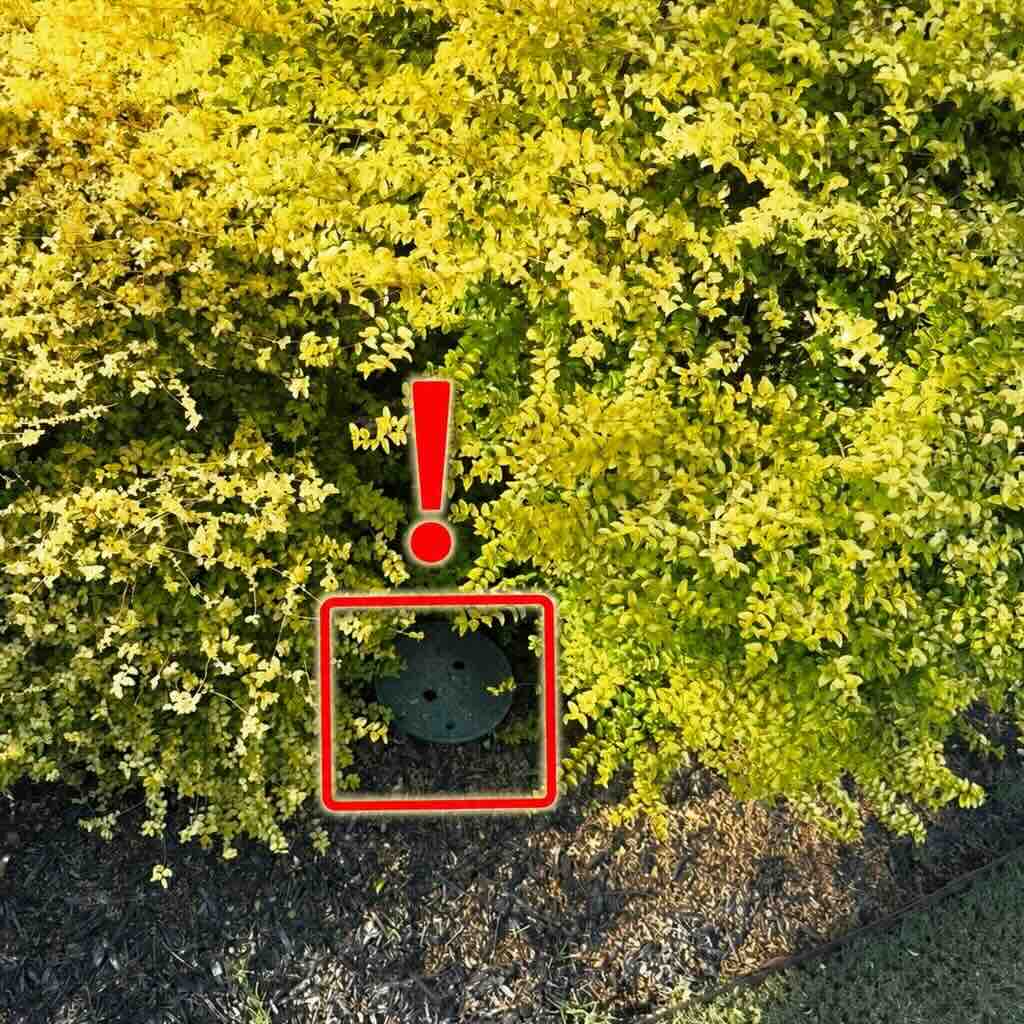
Look for a small round or rectangular box nearby, usually green or black, sometimes half-covered by grass or mulch. Pop the lid off by hand, no tools needed. Inside you’ll usually find your pressure reducing valve (PRV) and your secondary shutoff sitting right next to each other.
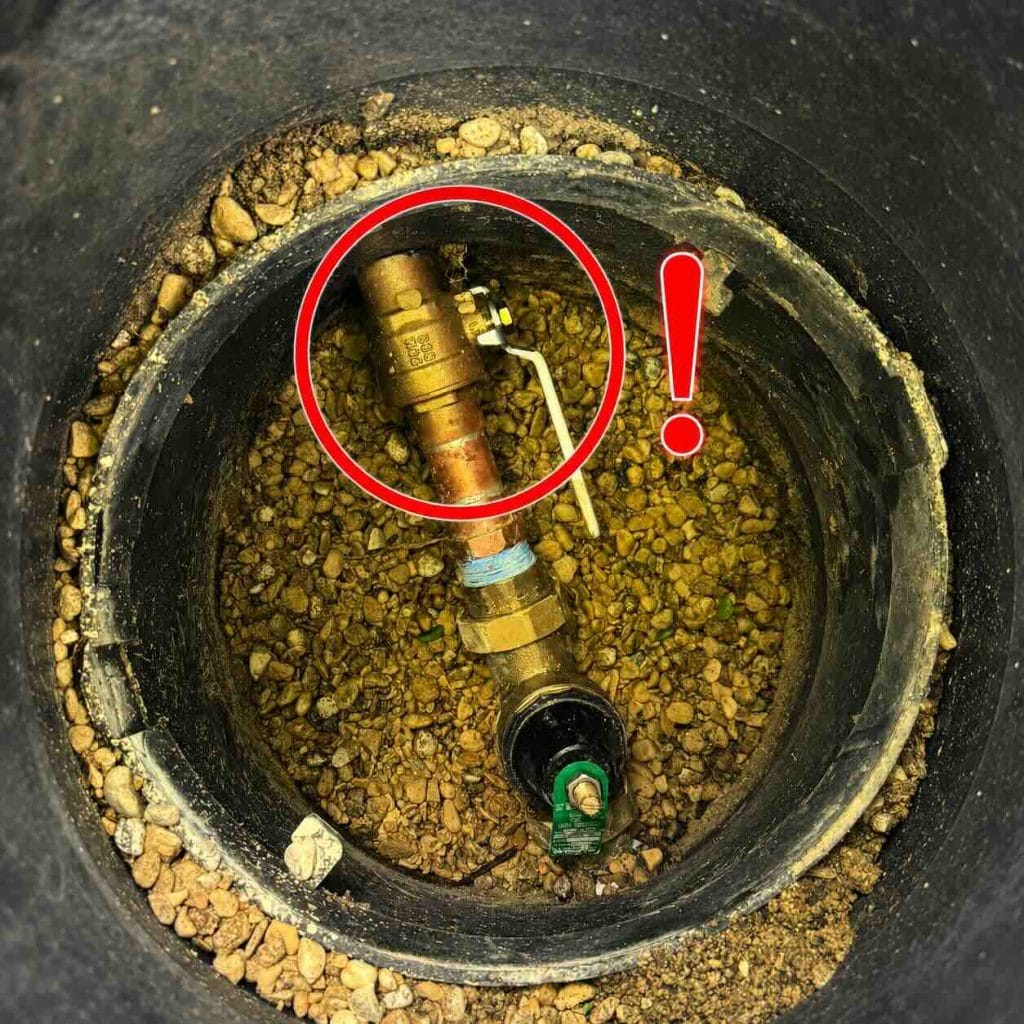
The shutoff is usually a ball valve with a lever, or a gate valve with a round wheel. When the lever’s parallel to the pipe, water’s flowing. Turn it perpendicular to the pipe and the water stops. No meter key needed, it should move by hand.
Now, sometimes you get unlucky. These boxes sit in the ground for years and fill up with dirt, and the valves get buried right under it.
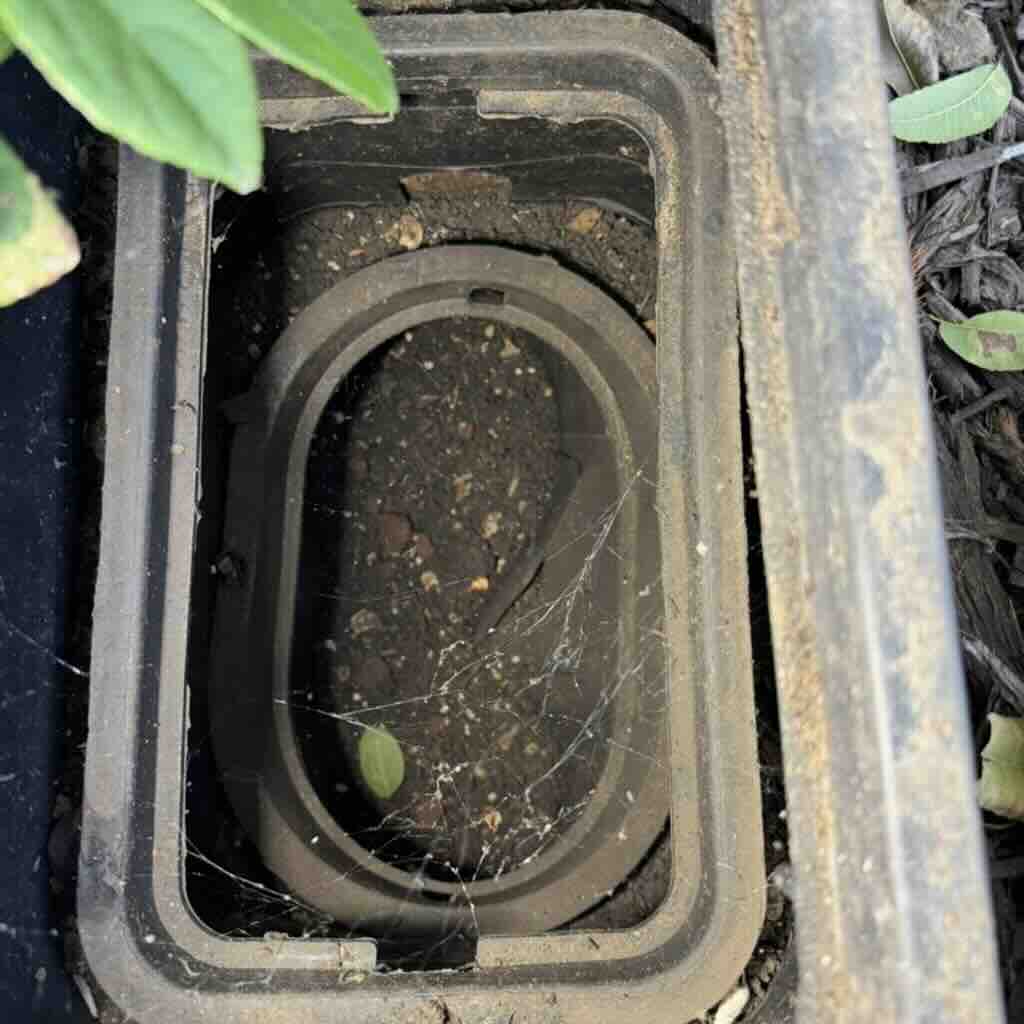
I tell everybody, check this valve once a year and make sure it still turns smoothly. Valves that sit unused for years seize up from mineral buildup, and the worst time to find that out is during an emergency. If you want to understand more about that PRV sitting next to it, here’s our guide on PRV replacement.
Where Is the Water Shut-Off Valve in Plano and Older North Texas Homes?
If you’re in an older part of Plano, Carrollton, or Richardson, this buried-box setup is what you’ve got, and after 20-30 years these valves seize up hard. I’ve seen plenty of old gate valves snap right off in someone’s hand, and that turns a small leak into a flooded yard. So if yours won’t turn – don’t force it, that’s a call-a-plumber moment.
Step 3: Check Inside the Garage for Newer Homes
If your home was built in roughly the last 10 to 15 years in Frisco, McKinney, Prosper, Plano, or nearby, there’s a good chance your secondary shutoff is inside the garage instead of buried in the yard. Updated North Texas building codes pushed this change, and honestly it’s a much better setup.
Go into the garage and just look around the walls especially near the water heater or on an exterior wall where the water line comes into the house. In a lot of Texas homes, you’ll find a small white access panel or little white door, plastic or metal. It’s usually way smaller than your electrical panel, so don’t expect some huge box.
Open it up and, most of the time, you’ll see the secondary shutoff valve and the pressure reducing valve (PRV) inside. That’s one of the first places to check if you’re trying to find the main water shutoff for the house.
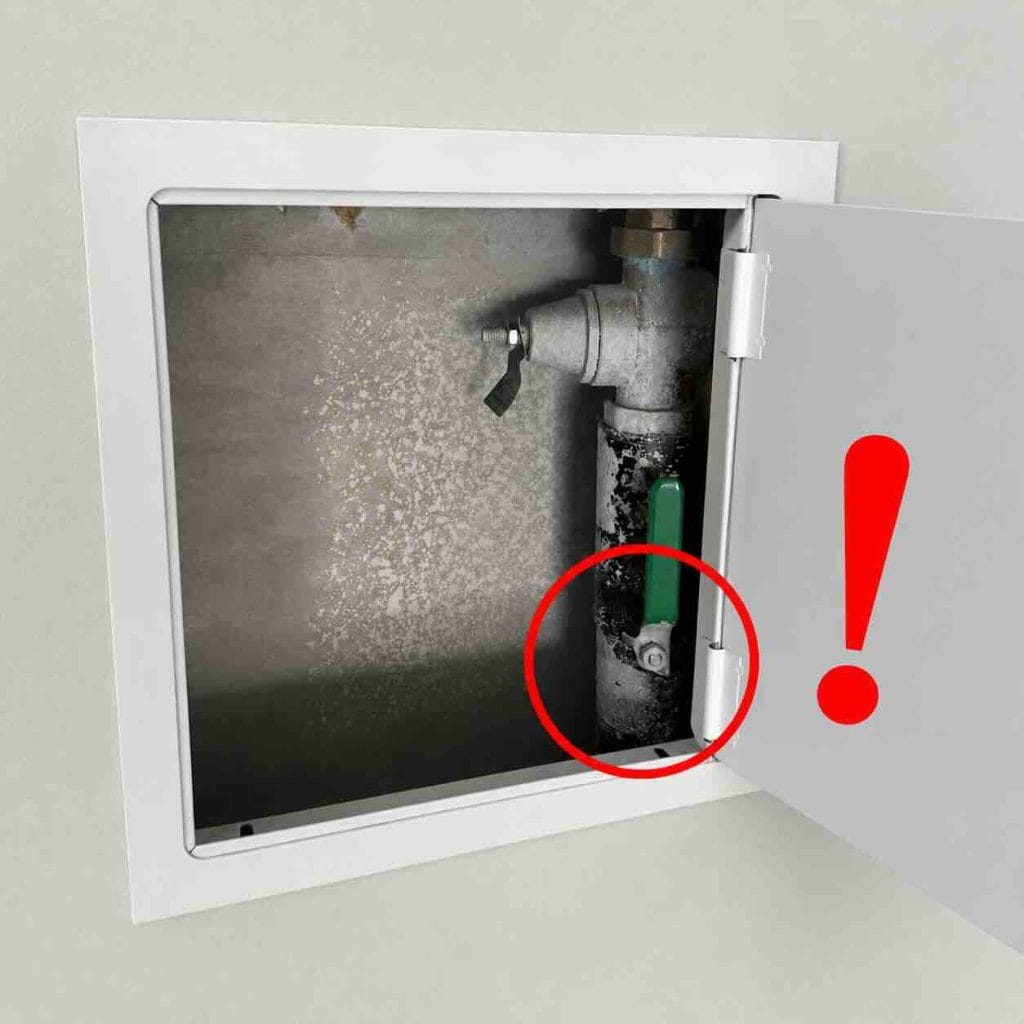
These indoor shutoffs are the easiest of all. The lever moves by hand, no tools, no digging, no crawling in the dirt. Parallel to the pipe means water’s on. Turn it 90 degrees, perpendicular, and the water’s off. That simple.
The upside is obvious. Emergency at 1 AM? You’re not outside in your pajamas hunting for a buried box in the dark. You walk into the garage, flip the handle, done. Whole house shuts off instantly.
Not sure if you’ve got this setup? Take two minutes right now and go look near your water heater or along the wall closest to the street. If you find it, test it once. If you don’t, you’ve probably got the outdoor setup from Step 2.
Where Is the Water Shut-Off Valve in Frisco and Prosper Homes?
Quick cheat sheet for newer neighborhoods: in Frisco, Prosper, and Celina homes built after 2010-2015, check the garage first – look for that small white panel near the water heater or on the wall facing the street. Nine times out of ten, your shutoff and PRV are right there. The meter box by the curb is still your backup, but you’ll rarely need it.
Step 4: Know When to Shut Off Your Water
Knowing where the valves are doesn’t help if you don’t know when to use them. Here’s when shutting off fast saves you serious money.
Active leaks are the obvious one. Water spraying from a pipe, pooling on the floor, or running when nothing’s turned on, shut it off right away. I’ve seen ceilings collapse, floors ruined, drywall destroyed, all because somebody waited too long. If the leak’s hidden and you can’t find the source, professional water leak detection can track it down.
Burst pipes, common here during those January and February cold snaps. When it drops into the teens, pipes in attics and exterior walls freeze and crack. The real damage comes when they thaw and let go. Shut the water off first, then deal with the pipe.
Water heater problems , if the tank itself is leaking, banging, hissing, or pooling water around the base, shut off the supply. Most heaters have their own shutoff on the cold inlet, but if that one’s stuck, go to your main. If your unit’s getting up there in age, our water heater service page can help you plan ahead.
PRV failures , really common around here because North Texas city water pressure runs high. When the PRV fails, you get pressure spikes that wreck fixtures, appliances, and pipes. If you see it leaking or your pressure suddenly shoots up, shut off the water and call a plumber.
Step 5: Turn the Valve Safely Without Making It Worse
This is where people sometimes turn a small problem into a big one by forcing a valve that doesn’t want to move. Let’s not do that.
Turn it slow and steady. Ball valve lever or gate valve wheel, doesn’t matter, smooth and controlled. Don’t yank it, don’t force it, don’t grab a pipe wrench unless you absolutely have to. A valve in decent shape should turn by hand.
If it’s a gate valve, the round wheel kind and it won’t budge, try gently rocking it. Quarter turn one way, back the other, then try closing again. Mineral buildup seizes these up over time and a little back-and-forth can break it loose. But if it still won’t move after a few tries – stop! Forcing it snaps the stem or cracks old pipe.
Ball valves should swing through 90 degrees smoothly. If the handle’s stuck it usually means it hasn’t been touched in years. Steady pressure’s fine, but if it won’t go easy, stop and call a plumber. Breaking a ball valve while it’s under pressure makes a bigger leak than the one you started with.
Once it’s closed, open a faucet inside to bleed off the pressure and confirm the water’s actually off. Run a sink until the flow stops. If water keeps coming, the valve didn’t fully close, turn it a bit more or use a different shutoff.
Step 6: What to Do When the Valve Won't Turn or You Can't Find It
Sometimes it just doesn’t go to plan. Here’s your backup.
If the secondary valve near the house is stuck or broken, head to the meter box by the street. Less convenient, needs the tools, but the city keeps that one maintained so it should always work. No tools? Call your water utility, they’ll send someone to shut it at the meter, though it can take a while during an emergency.
Can’t find any valve at all? Check your home inspection report if you bought recently, inspectors usually note the main shutoff location. Your local water utility also has records and can tell you the typical setup for homes in your area. If you need a pro, here’s our guide on finding a reliable plumber near you.
If a valve breaks while you’re turning it and it happens with old corroded ones, don’t panic. Grab towels, buckets, anything to slow the water, then call an emergency plumber. Trying to fix a broken shutoff while water’s flowing usually makes it worse.
When should you stop and call? If it won’t budge after gentle tries, if it leaks from the stem when you turn it, if you hear cracking, or if you just can’t find any shutoff at all. Knowing when to stop is as important as knowing how to shut it off.
Quick Checklist: Be Ready Before the Plumbing Emergency Happens
Take five minutes this weekend to locate both of your shutoff valves. Walk out to the street and find your meter box-make sure you know exactly where it is and that you can open the lid. Then find your secondary shutoff near the house, whether it’s buried near the sewer cleanouts or inside your garage. Test each valve to make sure it turns smoothly. If either one is stuck, now is the time to fix it, not during an emergency.
Keep those two tools-the meter box lid key and the water meter key-somewhere accessible. Your garage is perfect. Label them if you need to. When water is spraying at 1 AM, you don’t want to be searching through random drawers trying to remember where you put them.
Remember the two main shutoff locations: the meter box by the street requires tools and shuts off all water to your property. The secondary valve near your house or in your garage is easier to access and handles most situations. Turn valves slowly, never force them, and open a faucet inside to confirm the water is off.
If anything feels wrong-the valve won’t turn, it’s leaking, you hear unusual sounds-stop and call a professional. A stuck or broken valve needs proper tools and experience to fix safely. Knowing when to stop is just as important as knowing how to shut off the water. Residents in Plano and throughout North Texas can count on local professionals who understand these systems.
This is one of the simplest things you can do to protect your home from serious water damage. A burst pipe or failed water heater can dump hundreds of gallons into your house in just an hour. The difference between minor damage and a major disaster often comes down to how quickly you can shut off the water. Now you know exactly where to go and what to do.
If you discover your shutoff valves are stuck, broken, or missing, or if you’re dealing with an active leak and need help right now, we’re available 24/7 for emergency calls throughout Frisco, Plano, McKinney, and surrounding areas. Contact a plumber near me or give us a call. We’ll get your water shut off safely and handle whatever repairs you need-no pressure, no upselling, just real help when you need it most.
FAQ
How do I turn off the water to my house in an emergency?
Find your secondary shutoff first – it’s in the garage in newer Frisco and Prosper homes, or in a small ground box near the sewer cleanouts in older Plano homes. Turn the lever 90 degrees. If it’s stuck or you can’t find it, use the meter box at the street with a water meter key.
How to shut off the main water valve?
You can shut off the main water valve at the water meter near the street using a water meter key. This guide shows exactly where it’s located and how to turn it off.
Where is the main water shutoff valve located in Texas homes?
In most Texas homes, including Frisco and Plano, the main water shutoff is located at the water meter near the street, with a secondary shutoff closer to the house or inside the garage.
What tools do I need to shut off the water?
You typically need a meter box lid key to open the cover and a water meter key to turn the valve. Both tools are inexpensive and easy to find at any hardware store.
Need Help Right Now?
If your shutoff valves are stuck, broken, or missing or you’ve got an active leak and need help this minute, we’re available 24/7 for emergency calls. Whether you need an emergency plumber in Frisco, a plumber in Plano, a plumber in McKinney, or a plumber in Prosper, we’ll get your water shut off safely and handle whatever repair you need, no pressure, no upselling, just real help.
